

22
Jul
What is a Dental Emergency?
Medically reviewed by Dr. Nima Afzalian, DDS
Last Updated: July 2026
Reading Time: 10 Minutes
What is a dental emergency? Simply, a situation in which any tooth, gum, or mouth problem that needs care right away to stop severe pain, bleeding, or infection, or to save a tooth. A knocked-out tooth, a swollen face from an infection, or a mouth injury that won’t stop bleeding all count. Most dental problems are not emergencies, though, and this guide will help you tell the difference fast, so you know what to do next and what it’s actually going to take to fix it.
Dr. Afzalian’s note: “Patients often wait too long because they’re not sure if what they’re dealing with counts as an emergency dental situation. But I believe if you’re even asking the question, call us. We can tell you over the phone whether it needs to be seen today or can wait, and we’ll never make you feel silly for checking.”
What Counts as a Dental Emergency (and What’s Not)
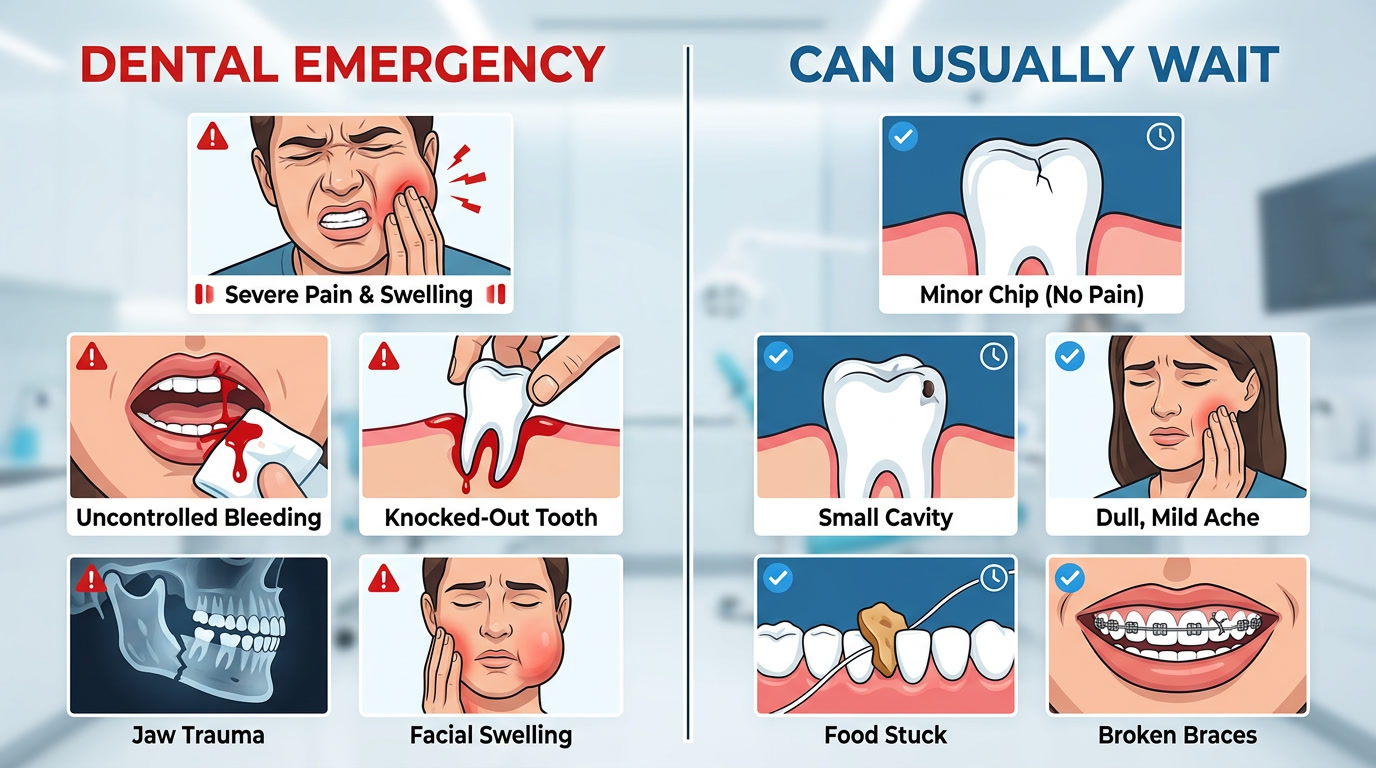
Here are the signs of a dental emergency and what actually needs urgent care:
- Severe or worsening pain
- Bleeding that won’t stop
- Facial swelling
- A knocked out or badly displaced tooth
- Trauma to the mouth or jaw
And here’s what usually can wait for a regular appointment:
- A dull, mild ache
- A minor chip with no pain
- A small cavity
- Food stuck between teeth
- Broken braces without bleeding
- A minor cut or sore in the soft tissue of the mouth
If your situation matches the first list, don’t wait it out. If it matches the second, it’s still worth seeing a dentist soon, just not tonight.
Common Types of Dental Emergencies
So what is a dental emergency? Here are a few common dental emergency examples and what each one looks like:
- Knocked-Out Tooth: This happens when a fall, sports injury, or blow to the face fully removes a tooth from its socket. It’s most common in kids and teens during physical activity.
- Cracked or Broken Tooth: This is a break in the tooth, often from biting down on something hard, a bad sports injury, or a fall. The severity ranges from a small surface chip to a crack that runs deep into the tooth.
- Tooth Abscess or Infection: A pocket of infection usually caused by untreated decay, a cracked tooth, or gum disease that lets bacteria reach the inside of the tooth or the surrounding gum.
- Uncontrolled Bleeding: Mouth bleeding that doesn’t stop with steady pressure, usually from an injury, a cut to the gum or tongue, or after a dental procedure.
- Lost Crown or Filling: This happens when the cement holding a crown or filling in place wears down or breaks, often from chewing on something hard or normal wear over time.
- Dry Socket: A complication that can follow a tooth extraction, when the blood clot that’s supposed to protect the healing socket gets dislodged or never forms properly.
Should I Go to the ER or Call a Dentist?
For most dental problems, call an emergency dental clinic first. Most emergency rooms cannot actually treat the tooth itself, since they don’t have a dentist on staff. They can manage pain and prescribe antibiotics for a short time, but they can’t fix a cracked tooth, pull an infected one, or do a root canal.
This isn’t a small issue either. The American Dental Association reports that around 2 million ER visits happen every year for dental pain in the U.S., and treating a dental problem in the ER costs about three times more than seeing a dentist, averaging $749 per visit when the patient isn’t admitted. That adds up to roughly $1.6 billion spent nationally every year, often on visits that still end with the patient needing to see a dentist afterward anyway. Separate hospital data has shown the average cost per ER visit for a dental problem climbing from $712 in the year 2012 to $1,912 in 2018.
So save the ER for real medical emergencies: trouble breathing or swallowing, bleeding that won’t stop with pressure, or trauma to the jaw or facial bones. For everything else, an emergency dental office is the right first call, and it will almost always cost you less.
What to Do in a Dental Emergency
These emergency dental care steps help while you’re on your way to a dentist. They buy you time; they don’t replace treatment.
| Emergency | What to do | Important to know |
| Knocked out tooth | Keep the tooth moist in milk or saliva until you reach a dentist | Never store it dry or in plain water, it damages the tooth’s cells |
| Cracked or broken tooth | Rinse your mouth with warm water and apply a cold compress to the cheek | Avoid chewing on that side until you’re seen |
| Tooth abscess or infection | Rinse gently with warm salt water and use a cold compress for swelling | Never place aspirin directly on the gums, it can burn the tissue |
| Uncontrolled bleeding | Apply clean gauze with gentle, steady pressure | If it won’t stop after 10 to 15 minutes of pressure, seek care right away |
| Lost crown or filling | Keep the piece if you can find it, and avoid chewing on that side | Don’t try to glue it back in with household products |
| Dry socket | Rinse gently with warm salt water and avoid smoking or using straws | Don’t try to pack or clean the socket yourself, let a dentist handle it |
Why Waiting on a Dental Emergency Is Risky
An infection doesn’t stay put. An untreated dental infection can spread beyond the tooth into surrounding tissue, and in rare cases become dangerous. Waiting also tends to make the eventual fix bigger and more expensive. What might have been a simple filling today can turn into a root canal or a tooth extraction a few weeks from now if it’s ignored.
Seeking emergency dental services early can:
- Save the tooth instead of needing an extraction.
- Stop the pain at its source.
- Keep small problems from becoming bigger ones.
- Protect existing dental work.
- Cost less than treating a bigger problem later.
How Dental Emergencies Are Treated
Emergency dental treatments depend on what’s actually wrong:
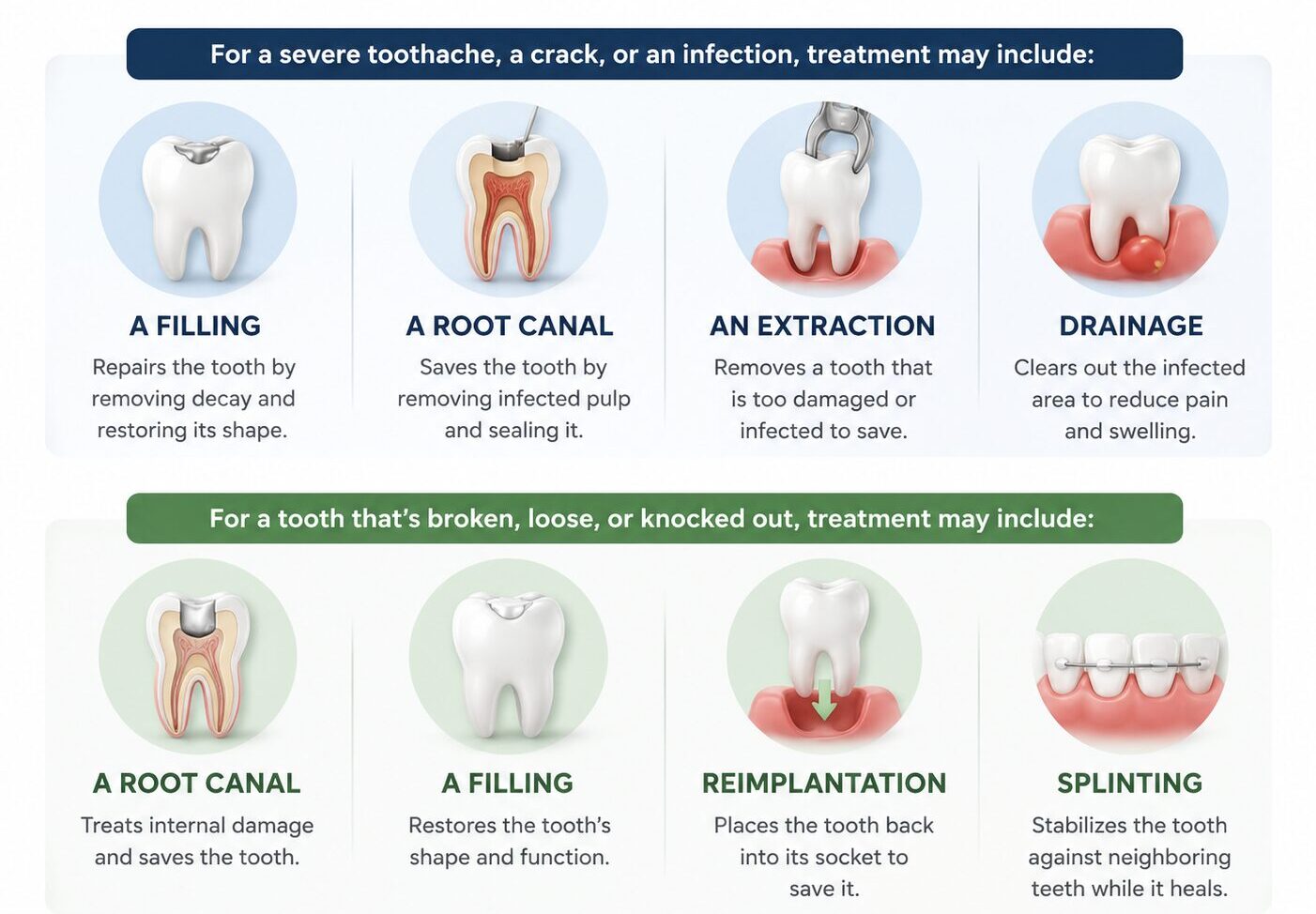
Most people assume an infected tooth automatically means antibiotics. Current ADA guidance actually says the opposite. If a dentist can treat the tooth that same day by draining it, doing a root canal, or extracting it, antibiotics are specifically not recommended, since they don’t fix the underlying problem. Antibiotics are mainly reserved for infections that have spread beyond the tooth or come with a fever, not as a routine first step.
Also remember! None of these outcomes are guaranteed. Success depends a lot on how quickly the tooth gets treated, which is exactly why time matters so much with these injuries. A dentist will always examine the tooth first and decide the right combination of treatment from there.
Not Sure If It’s a Dental Emergency? Here’s What to Do
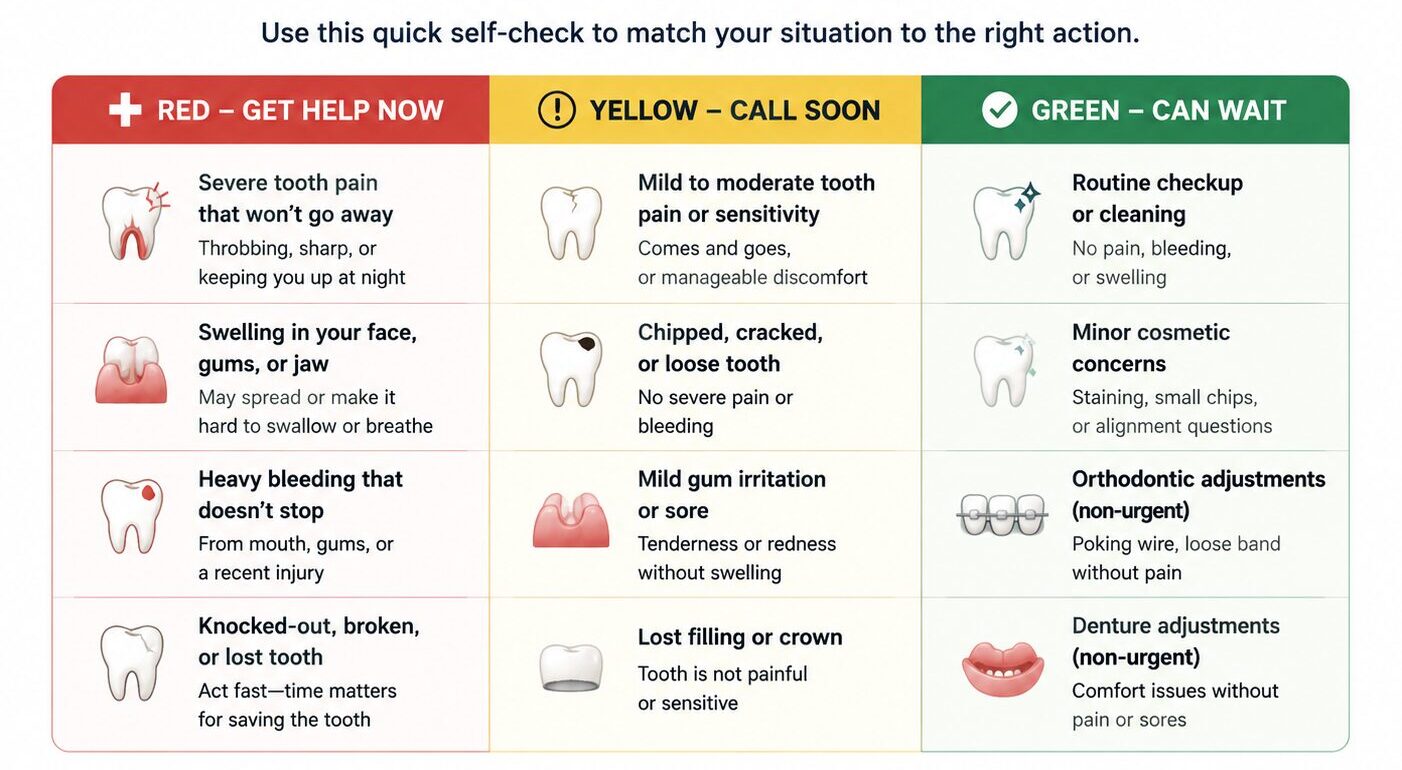
When in doubt, call. Describe what’s going on to the dentist’s office, and the team can tell you whether it needs to be seen today or can wait for a regular appointment. It’s also worth knowing what your dental insurance covers for emergencies before you actually need it, rather than trying to figure it out mid-crisis.
If it happens on a weekend, don’t assume you’re out of luck. Many dental offices take calls for urgent dental care outside of regular hours and can tell you what to do next or get you seen quickly.
Emergency Dental Insurance and Cost
Most dental insurance systems and plans cover at least part of an emergency exam and urgent treatment like an extraction or filling, but coverage varies quite a bit by plan, so it’s worth checking your benefits ahead of time.
If you don’t have insurance or the money to pay upfront, you still have options. Payment plans, financing, and in-house membership plans can make emergency care manageable, and cost should never be a reason to ignore severe pain, bleeding, or swelling. Call and ask; most practices can work something out.
Here’s what emergency dental care actually costs:
| Where you go | Typical cost |
| Emergency room facility charge | $1,000 to $2,500 |
| Emergency dental exam | $100 to $300 |
| Extraction | $150 to $650 |
| Root canal | $700 to $1,500 |
These are general ranges, and your actual cost depends on your specific situation. But the pattern holds: an ER visit usually costs more and still doesn’t fix the tooth.
Where to Go for a Dental Emergency in Glendale
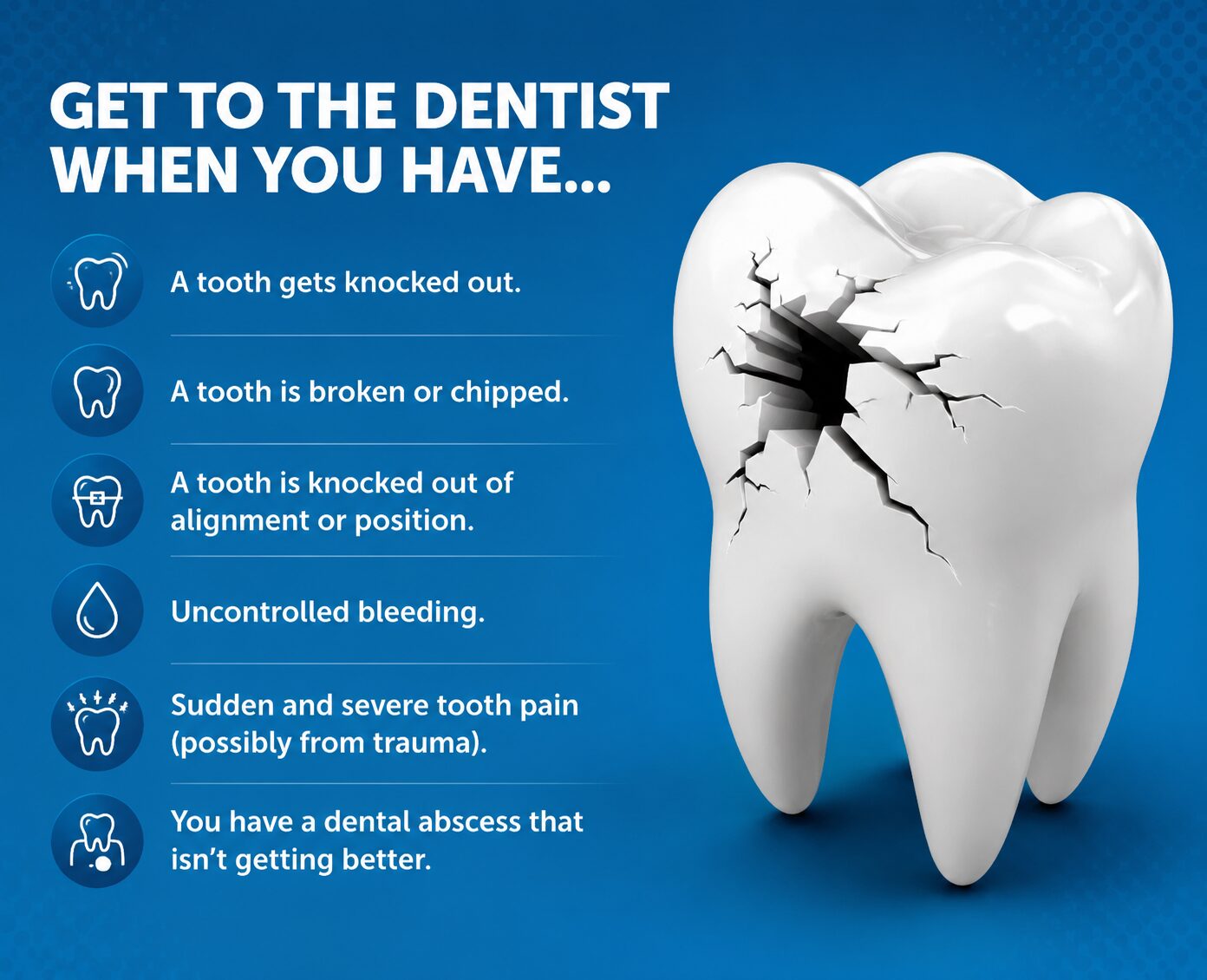
If you’re dealing with a dental emergency, My Dental and Implants can help you understand your options and find the right treatment for your situation. Dr. Nima Afzalian takes a minimally invasive approach whenever possible. He focuses on preserving your natural teeth and recommending treatment based on what your condition actually requires.
So if you need a filling, crown, root canal, extraction, or other emergency care in Glendale, our team is here to provide personalized treatment and help you move forward with confidence.
We provide Same-Day Emergency Dentistry options for patients throughout Glendale, Peoria, Phoenix, Surprise, and Sun City, Arizona, helping you get the care you need when timing matters.
Call My Dental and Implants today:
- Visit us at 6637 West Peoria Ave, Suite D-2, Glendale, AZ 85302.
- Call us at (623) 300-2550.
This article is for general information only and is not a substitute for a dental exam or diagnosis. If you’re dealing with severe pain, bleeding, or swelling, contact a dentist right away, or call 911 if you have trouble breathing or swallowing, or facial trauma.
Sources: Cleveland Clinic, American Dental Association, American Association of Endodontists.
FAQs
What is classed as a dental emergency?
Some people still do not know “What is a Dental Emergency?”. It’s any tooth, gum, or mouth problem that needs care right away to stop severe pain, bleeding, or infection, or to save a tooth. Not every dental problem qualifies.
Is a bad toothache considered a dental emergency?
Severe, worsening, or throbbing pain, especially with swelling or fever, usually is. A mild, nagging ache typically is not, though it still deserves a dentist visit soon.
Is a tooth abscess an emergency?
Yes. An abscess is a bacterial infection. It can spread to nearby tissue and, in rare cases, become life-threatening if untreated.
Can a cavity be a dental emergency?
Usually not on its own, but a cavity that causes severe pain, visible infection, or a broken tooth around it can become one.
Can you go to the ER for a dental emergency?
You can, but most ERs cannot perform actual dental treatment; they mainly manage pain and infection short-term. A dentist is the right first call unless there’s uncontrolled bleeding, trouble breathing, or facial trauma.
What should I do if my tooth gets knocked out?
Pick it up by the crown, not the root, rinse it gently, and try to place it back in the socket. If that’s not possible, keep it moist in milk or saliva and see a dentist right away. Don’t try this with a baby tooth, though; leave that to a dentist.
Is a lost filling or crown a dental emergency?
It’s usually urgent but not always a true emergency. See a dentist promptly, since the exposed tooth is more vulnerable to further damage, decay, and shifting.
Can a dental infection become dangerous if it is not treated?
Yes. An untreated abscess can go and spread beyond the tooth and, in rare cases, become life-threatening, which is why swelling with pain should never be ignored.
What should I do in a dental emergency with no money?
Call the dentist and explain the situation. Many offices offer payment plans or financing, and cost should never be a reason to ignore severe pain, bleeding, or swelling.
What should I do if I have a dental emergency on the weekend?
Call your dentist’s office first. Many, including My Dental and Implants, take calls for urgent situations outside regular hours and can advise next steps or fit you in quickly.
Share this Article

Dr. Nima Afzalian's
Dr. Nima Afzalian's
journey in dentistry began at 12 when he experienced the transformative power of
dental care during a tooth-filling procedure. That pivotal moment ignited his passion for dentistry, and
he has since dedicated his life to making a difference in people's lives by relieving pain and
discomfort through his expertise.
Nima earned his bachelor's and master's degrees in Biomedical Engineering from the
prestigious Barrett
Honors College at Arizona State University. Subsequently, he obtained his dentistry doctorate
from the
Midwestern College of Dental
Medicine, graduating with honors, with recognition in Dental Implants and
the Dean's Award as the Top Clinician of his class.
With his extensive education, clinical excellence, and genuine dedication to patient well-being, Dr.
Nima Afzalian is excited to provide you with the highest level of care for all your dental needs. When
you choose Dr. Nima, your oral health is in capable hands!
Success Stories
We are blessed with clients and patients who are loyal to us and have the nicest things to say about us.
Translate »