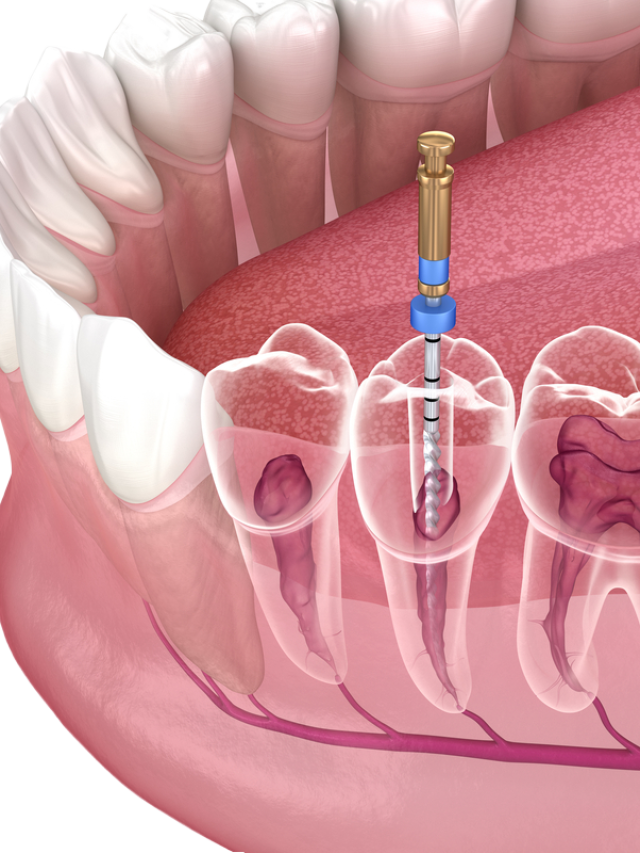
Root Canal Treatment in Glendale, AZ
A toothache that throbs when you bite down, lingers after hot or cold, or keeps you up at night usually means something is wrong beneath the surface, not just on it. Ignoring it rarely makes it go away; more often, the infection spreads until the tooth itself is at risk. At My Dental & Implants, Dr. Afzalian’s approach starts with the same question you have: can this tooth still be saved?
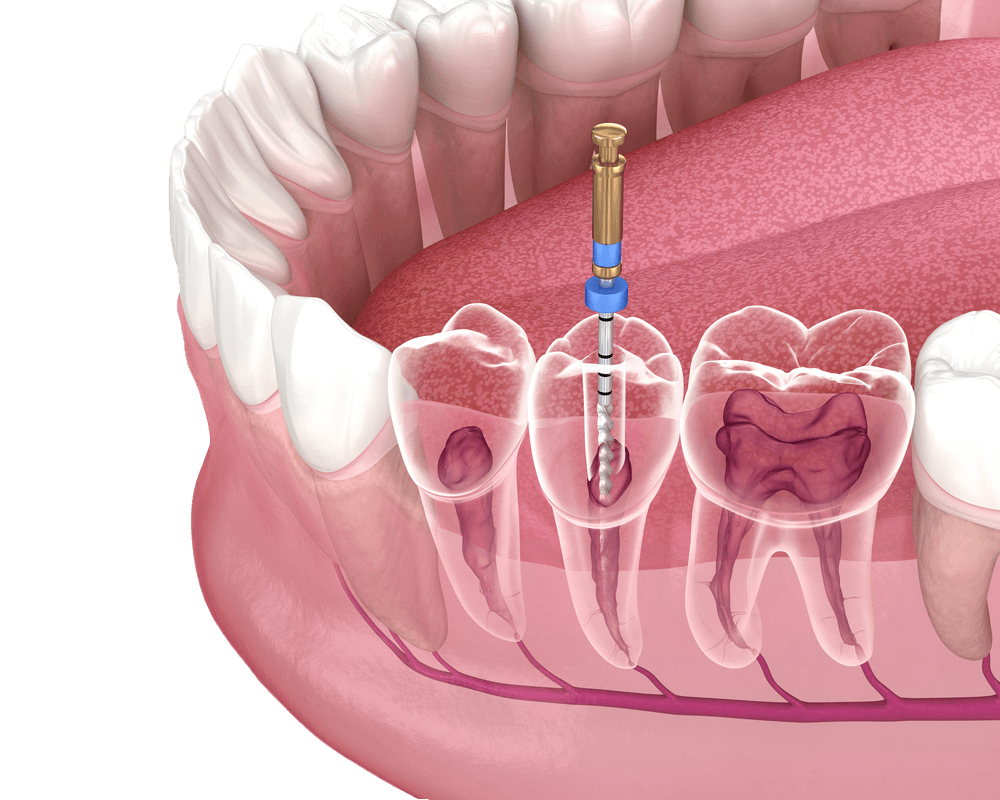
In most cases, the answer is yes. Our root canal in Glendale removes the infected tissue causing the pain. This endodontic treatment helps the tooth stay in your mouth and keep doing its job instead of being pulled.
TOOTH PAIN AND INFECTION
What an Infected or Damaged Tooth Can Do to Daily Life
A toothache rarely stays put. If you leave it untreated, the infection behind it spreads, and what started as a dull ache can turn into a dental emergency.
- Deep decay or a cracked tooth exposes the nerve. This can trigger sharp pain when you bite down or breathe in cold air.
- An untreated infection spreads into the bone and gum tissue. This can swell the face or jaw.
- Ongoing tooth pain disrupts sleep. It also makes it hard to concentrate.
- A tooth that needs repeated fillings or crowns often has an infection that was never fully resolved.
- A tooth left untreated too long may need to be extracted. That can lead to bone loss and shift nearby teeth.
Our root canal in Glendale can treat the infection at its source and stop it from spreading further. At My Dental & Implants, we clean out the infected tissue and seal the tooth, so it can keep functioning instead of being pulled.

The BASICS
What to Know Before Root Canal Treatment
Most patients have the same three questions before treatment: what caused it, will it hurt, and how long until things feel normal again.
Root Canal Symptoms
Persistent tooth pain, sensitivity to hot or cold, and tenderness when you bite down are common signs of an infected tooth. A pimple or abscess on the gum near the tooth, and a tooth that darkens or turns gray, are also key warning signs.
Root Canal Pain
Local anesthesia numbs the tooth during treatment, so most patients feel pressure rather than pain. Any soreness after treatment is usually mild and eases with an over-the-counter pain reliever.
Root Canal Recovery Time
Most patients return to normal activities the same day. The area itself heals within a few days, at which point the tooth feels back to normal.
EMERGENCY CARE
Emergency Root Canal in Glendale
Some tooth infections can’t wait for a regular appointment. If you notice facial or jaw swelling, a fever, pain that keeps you up at night, or pain that gets worse instead of better, you need dental emergency care, so call us right away.
At Dental & Implant, Dr. Afzalian offers same-day appointments for patients dealing with severe tooth pain or a suspected infection. The sooner an infected tooth is treated, the better the chances of saving it and avoiding complications like a spreading infection or tooth loss.
CANDIDACY
Candidates for the Root Canal Procedure
Root canal treatments help save a tooth with an infected or inflamed pulp, but the right approach depends on how far the infection has spread and the tooth’s condition. During our dental exam, Dr. Afzalian uses an X-ray to see the extent of the infection and confirm the tooth can be saved.
Good Candidate Signs
Patients with a cracked, decayed, or previously treated tooth causing pain, sensitivity, or swelling are usually good candidates. Root canal treatment removes the infection and keeps the natural tooth in place.
Needs Additional Evaluation
Teeth with severe fracture, extensive bone loss, or insufficient healthy structure left may not be good candidates for saving. We review these factors during your exam to determine whether root canal treatment or extraction is the better option.
PROCESS
What to Expect During Your Root Canal Process
Dr. Afzalian, our root canal dentist in Glendale, explains each step before treatment starts, so you understand what happens and why. At My Dental & Implants, root canal treatment follows five steps.
01
Exam and Diagnosis
We take an X-ray to confirm the infection, check how far it has spread, and confirm the tooth can be saved.
02
Anesthesia and Access
We numb the tooth completely, then open a small access point to reach the infected pulp inside.
03
Cleanup and Disinfection
We remove the infected tissue from the tooth and its canals, then clean and disinfect the area to clear out remaining bacteria.
04
Filling and Seal
We fill the cleaned canal with gutta-percha, a biocompatible filling material, and seal the tooth to prevent reinfection.
05
Final Restoration
Most teeth need a crown after treatment. A crown restores strength and protects the tooth against future damage, especially in back teeth, which handle heavy bite force.
PATIENT TESTIMONIALS
In Our Patients’ Words
Real stories from people who trusted My Dental & Implants with their care, from the first visit to the results they walked away with.


Cost and financing
Root Canal Cost
The cost depends on the tooth’s location, how many canals it has, and whether a crown is needed afterward. We’ll go over the specifics after your exam.
Insurance Coverage
We work with plans like Aetna, Delta Dental, MetLife, UnitedHealthcare, and Blue Cross Blue Shield. Our team can check your benefits and confirm what applies to your treatment.
Flexible Financing Options
We work with Proceed Finance, CareCredit, and Cherry financing plans to help spread the cost of treatment into manageable monthly payments.
No Dental Insurance?
No insurance doesn’t rule out treatment. Ask us about low- or no-interest financing that fits your budget.
COMPARING YOUR OPTIONS
Root Canal vs Tooth Extraction
Both options treat an infected or badly damaged tooth. The right one depends on how much of the tooth can be saved, its position in your mouth, and your long-term goals.
| Category | Root Canal | Tooth Extraction |
|---|---|---|
| What It Does | Removes the infected pulp and seals the tooth so it stays in place | Removes the entire tooth, including the root |
| Best For | Teeth with enough healthy structure left to support a repair | Teeth too damaged, cracked, or infected to save |
| Tooth Function | Preserves your natural bite and chewing pattern | Leaves a gap that can shift nearby teeth over time |
| Recovery Time | A few days of mild soreness | A few days to a week, depending on the extraction |
| Follow-Up Treatment | Usually a crown to protect the tooth long-term | Often an implant, bridge, or denture to fill the gap |
| Long-Term Outcome | Keeps your natural tooth and root in place | Requires a replacement to restore full function |

LOCAL TRUST
Meet Your Root Canal Dentist in Glendale
At My Dental & Implants, Dr. Nima Afzalian, D.M.D., treats infected and damaged teeth with a focus on saving them whenever possible. He completed his Doctor of Dental Medicine (D.M.D.) at Midwestern University College of Dental Medicine-Arizona in 2022. Before that, he earned a Master of Science in Biomedical/Medical Engineering from Arizona State University in 2018 and studied Biomedical Engineering at ASU’s Barrett Honors College in 2017.
Clinical Background
Since 2022, Dr. Afzalian has treated patients across restorative dentistry, root canal therapy, dental implants, and full mouth rehabilitation. Every case starts with a thorough exam and current imaging technology to confirm the right course of treatment before any work begins.
Recognition & Training
Dr. Afzalian was recognized with Honors in Dental Implants and received the Dean’s Award as Top Clinician during his training. That background supports the kind of careful, case-by-case planning patients need when a tooth is on the line.
Q&A
Common Questions Answered
How much does a root canal cost?
Cost depends on the tooth’s location, how many canals it has, and whether a crown is needed afterward. We can give you an accurate estimate once we’ve examined the tooth.
Does a root canal hurt?
Local anesthesia keeps the tooth numb during the procedure, so most patients feel pressure rather than pain. Some soreness afterward is normal and usually manageable with over-the-counter medication.
How long does a root canal take?
Most root canals take about one to one and a half hours per tooth and are completed in a single visit.
How many visits does a root canal require?
Most cases are finished in one visit. More complex or severely infected teeth may need two.
Is a crown always needed after a root canal?
Back teeth usually need a crown for added strength. Front teeth sometimes don’t, depending on how much structure remains.
What happens if I delay root canal treatment?
The infection can spread into the surrounding bone and gum tissue, which may lead to an abscess or loss of the tooth.
Will my insurance cover a root canal?
Many plans cover root canal treatment at least partially. Our team can check your specific benefits before treatment begins.
Can I drive myself home after a root canal?
Yes. Since only local anesthesia is typically used, most patients are able to drive themselves home after the appointment.
ROOT CANAL NEAR ME
Book Your Appointment for a Root Canal in Glendale
If a toothache has you searching for answers, don’t wait for it to get worse. Our team will check the tooth, walk you through your options, and get you out of pain as soon as possible. Book your appointment today and keep your natural tooth where it belongs.
RELATED CONTENT
Learn More
Explore our helpful guides to better understand the treatment and what to expect.