
17
Nov
Tooth Extraction and Implant Timeline: What to Expect at Each Stage
Table of Contents
The tooth extraction and implant timeline usually takes a few months to a year or more. The length depends on when the implant goes in and whether you need a bone graft. A tooth extraction and implant plan has several steps. In this guide, My Dental & Implants explains each step in plain words, along with the placement options and what can change your schedule.
How Soon After a Tooth Extraction Can You Have an Implant?
It can be the same day, a few weeks later, or several months later. It depends on the tooth, the bone, and your health. Many people ask how soon after tooth extraction can you get an implant, and the answer is different for each person.
A 2025 peer-reviewed review hosted by the National Institutes of Health groups the timing into four types. The table below explains how long after tooth extraction can you get an implant, and when each option may be considered:
| Timing | When the implant goes in | When it may be considered |
| Immediate | Same day as the extraction | No infection, enough healthy bone, and healthy gums |
| Early, after gum healing | About 4 to 8 weeks later | The infection has settled or the gum needs time to close |
| Early, after partial bone healing | About 12 to 16 weeks later | Larger sockets, such as a back tooth with several roots |
| Delayed | More than 4 months later | More healing is needed, or a graft needs time to mature |
Can a Dental Implant Be Placed Immediately After Extraction?
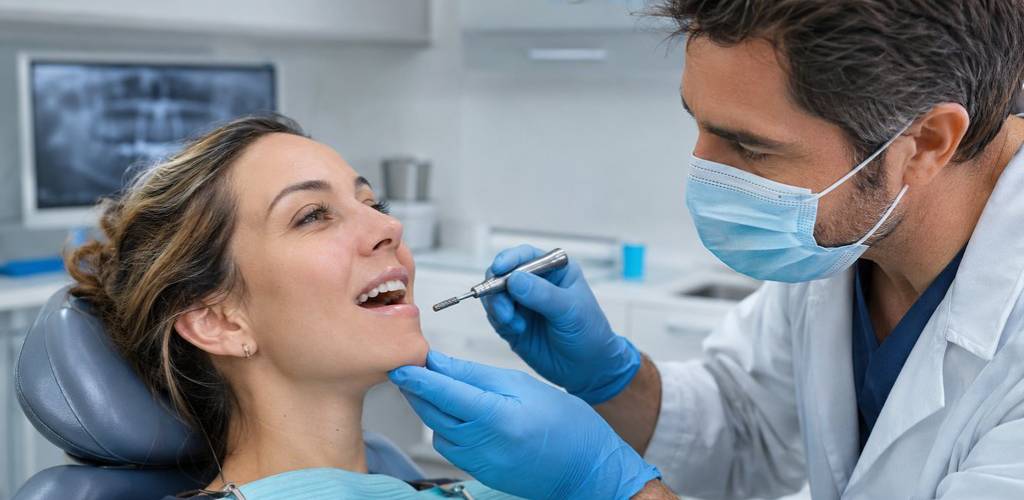
Sometimes, yes. An immediate implant after extraction means the dentist places the implant during the same visit the tooth comes out. The dentist first checks that there is no infection, enough healthy bone, and healthy gums.
A 2025 review hosted by the National Institutes of Health found that this can work well in the right case. It also found that same-day implants had a higher chance of the gum line moving down, which is called gum recession, than implants placed after a few weeks or months. This is why dentists choose these cases carefully.
Dental Implant Timeline by Stage
The dental implant timeline after extraction has six stages. Most of the time is healing, not time in the dental chair. The times differ from person to person, and a dentist sets your schedule after an exam. Below, we explain each stage in simple steps, including what happens, how long it may take, and how it fits into your healing:
| Stage | What happens | Approximate time |
| 1. Consultation and 3D Imaging | Exam, health review, 3D scan | 1 visit |
| 2. Tooth Extraction | The tooth is removed | 1 visit, then about 1 to 2 weeks for the socket to heal |
| 3. Bone Grafting | Graft material is added, if needed | Adds several months |
| 4. Implant Surgery | The implant post is placed | 1 visit |
| 5. Healing and Osseointegration | Bone grows around the implant | Up to several months |
| 6. Abutment and Final Crown | A connector and crown are added | 1 to 2 visits, plus lab time |
1. Consultation and 3D Imaging
Your first visit includes an exam, a review of your health, and a 3D scan. The scan shows how much bone you have and where the nerves and sinuses sit. This visit sets your timing plan and shows whether you may need a graft.
2. Tooth Extraction
The dentist removes the tooth and cleans the socket. The dentist may place a graft in the socket at the same visit. The socket usually heals in about 1 to 2 weeks. MedlinePlus says to avoid smoking and to skip straws for the first 24 hours after tooth extraction.
3. Bone Grafting
An implant needs enough healthy bone to hold it in place. A bone graft helps when the bone is thin, because it adds bone material to the jaw and builds a strong base for the implant. The American Association of Oral and Maxillofacial Surgeons says implants need enough bone to stay stable.
Not everyone needs a bone graft before dental implant surgery, and your dentist decides after a 3D scan. If you need one, your dentist can place it when the tooth comes out or at a later visit. The graft adds several months to your timeline, because the bone needs time to heal before the implant goes in.
Bone can also shrink after your dentist removes a tooth. The NIH-hosted review says the jaw can lose up to about half of its width in the first year, mostly in the first three months, in the area of the back teeth. If your jaw has already lost bone, you can see how that may affect your treatment in our article on dental implants with bone loss.
4. Implant Surgery

During implant surgery, your dentist places a small metal post in your jawbone. This stage usually takes one visit. The post works like a new tooth root. Your dentist usually numbs the area with local anesthetic first, so you should not feel pain during the surgery. Sedation options may be available, so ask about them if you feel nervous about the surgery. After surgery, the bone starts to heal around the post.
5. Healing and Osseointegration
Osseointegration means the bone grows around the implant and holds it in place. This is the longest stage. The American Dental Association says some patients wait up to several months before the replacement tooth is attached.
Dental implant healing time is different for each person. Smoking can slow healing, and illnesses such as diabetes may interfere with it. A temporary tooth may be an option for visible areas. While the bone heals, you may wonder when the final tooth goes on. See how long an implant can wait for its crown.
6. Abutment and Final Crown
The abutment is a small connector that joins the implant to the crown. The dentist takes a scan or an impression, and a lab makes your custom crown. When the crown is ready, the dentist attaches it to the abutment and checks the fit and your bite.
What Factors Affect Implant Timing?
Several factors that affect implant timing can make your schedule shorter or longer. Healing is different for everyone, and your bone, your gums, and your health all play a part. Here are the main things that can change your timeline:
- Less bone may slow your timeline because you may need a graft first, while enough healthy bone can keep it shorter.
- An infection at the site can slow your timeline because it needs to settle before the implant goes in.
- Gum disease can slow your timeline because it needs treatment before implant surgery.
- Smoking can slow healing.
- Health conditions such as diabetes may slow healing.
- A back tooth with several roots may slow your timeline because it can need longer healing.
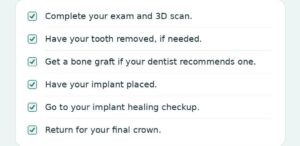
Tooth Extraction and Implant Timeline Checklist
At your exam, your dentist will use a 3D scan to plan your implant. They’ll explain which steps can happen on the same day and when you’ll need time to heal. Here are the steps you can check off along the way:
Final Thoughts
The tooth extraction and implant timeline is different for each person. Most of the time goes to healing, and a bone graft can add several months. A longer plan is a careful choice, not a setback. If you want to plan your own steps, you can book a visit at My Dental & Implants with Dr. Nima Afzalian. He can check your teeth and bone and talk with you about dental implants in Glendale, AZ.
FAQs
1. Does Waiting Too Long Affect Implant Options?
There is no strict deadline. Bone can shrink over time, but a graft may rebuild it. A 3D scan shows what your jaw needs.
2. How Does Your Dentist Decide the Right Timing?
Your dentist reviews your health, your gums, and a 3D scan of your bone. Then the dentist sets your tooth extraction and implant timeline.
3. Is Immediate Implant Placement Better Than Waiting?
Not always. Same-day placement can mean fewer surgeries, but it needs healthy gums and enough bone. Waiting may suit infection or thin bone.
4. Do I Always Need a Bone Graft Before a Dental Implant?
No. A graft is only needed when there is not enough bone to hold the implant. A 3D scan shows if you need one.
Share this Article

Dr. Nima Afzalian's
Dr. Nima Afzalian's
journey in dentistry began at 12 when he experienced the transformative power of
dental care during a tooth-filling procedure. That pivotal moment ignited his passion for dentistry, and
he has since dedicated his life to making a difference in people's lives by relieving pain and
discomfort through his expertise.
Nima earned his bachelor's and master's degrees in Biomedical Engineering from the
prestigious Barrett
Honors College at Arizona State University. Subsequently, he obtained his dentistry doctorate
from the
Midwestern College of Dental
Medicine, graduating with honors, with recognition in Dental Implants and
the Dean's Award as the Top Clinician of his class.
With his extensive education, clinical excellence, and genuine dedication to patient well-being, Dr.
Nima Afzalian is excited to provide you with the highest level of care for all your dental needs. When
you choose Dr. Nima, your oral health is in capable hands!
Success Stories
We are blessed with clients and patients who are loyal to us and have the nicest things to say about us.
Translate »