
20
Jul
How Long to Leave Garlic on a Toothache?
Reviewed by Dr. Nima Afzalian, D.D.S.
Last Updated: July 2026
Reading Time: 10 Minutes
Putting garlic on a toothache is a common home remedy, and many people find it does help for a little while. But how long to leave garlic on a toothache is where most advice gets vague.
As a general rule, garlic should stay on a sore tooth or the gum next to it for about 5 to 10 minutes, then be rinsed off with water. Leaving it on longer does not give you more relief; it only raises the chance of irritating or burning the tissue. Garlic may ease pain for a short time, but it does not fix what is actually causing the toothache.
Is Garlic Good for a Toothache?
Garlic may help with a toothache, but only in a limited way. Crushing, chopping, or chewing on garlic for a toothache releases a compound called allicin. Allicin has antibacterial and anti-inflammatory properties. It can help calm down some of the bacteria and inflammation around a sore tooth or gum, which may ease pain a little. But it does not numb the tooth the way a dental painkiller would, and it does not get rid of the actual problem underneath.
The research here is limited. Most studies on garlic for gum infection and toothache are small lab studies, not large human trials on toothache pain specifically. So it is fair to say garlic may help temporarily, but it is not a proven treatment for tooth pain.
What Kind of Garlic to Use?
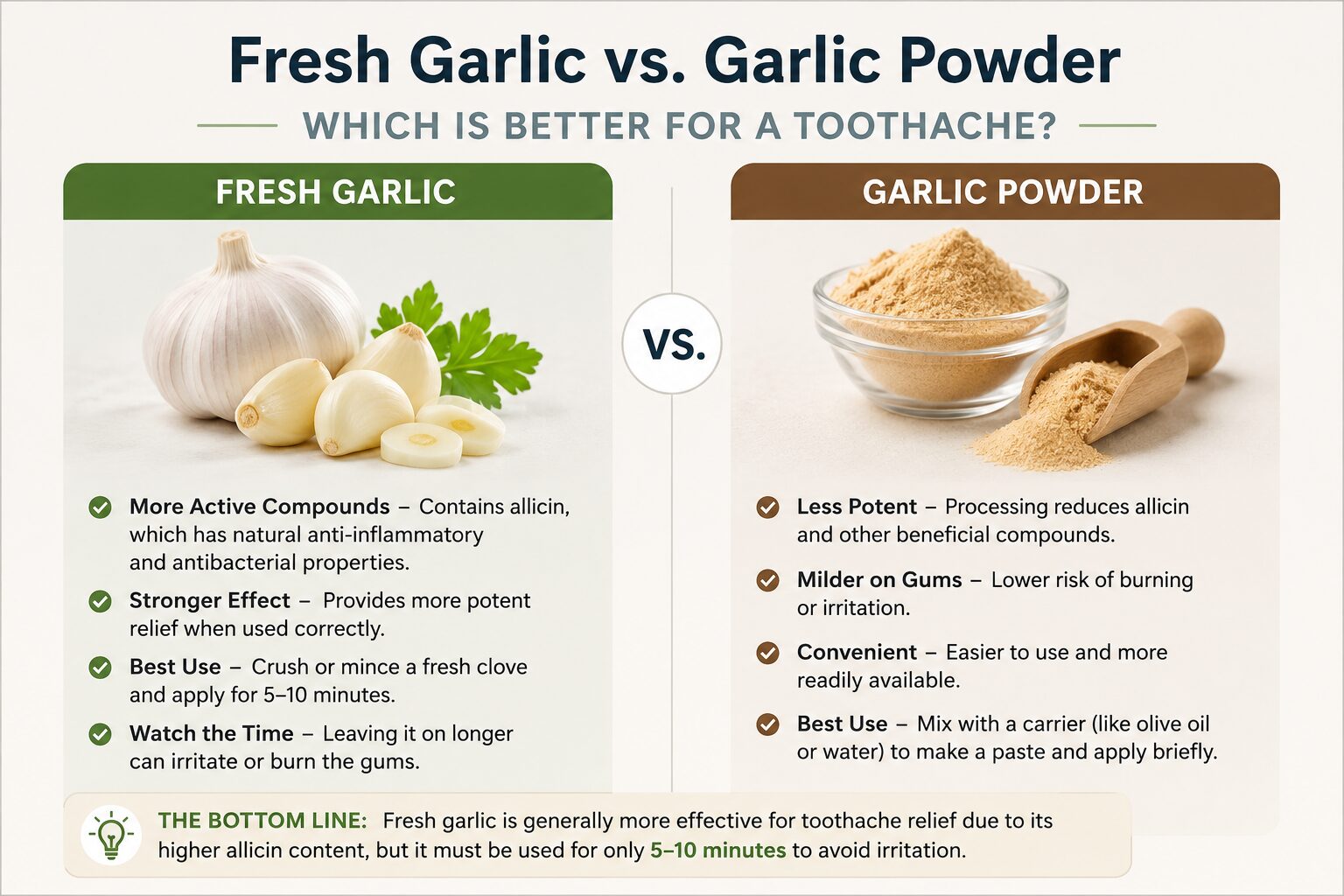
Use fresh garlic, not garlic powder. Allicin only forms when a fresh clove is crushed, chopped, or chewed. Garlic powder for toothache does not work the same way, since the drying and processing involved strip out most of the allicin.
How to Use Garlic for a Toothache
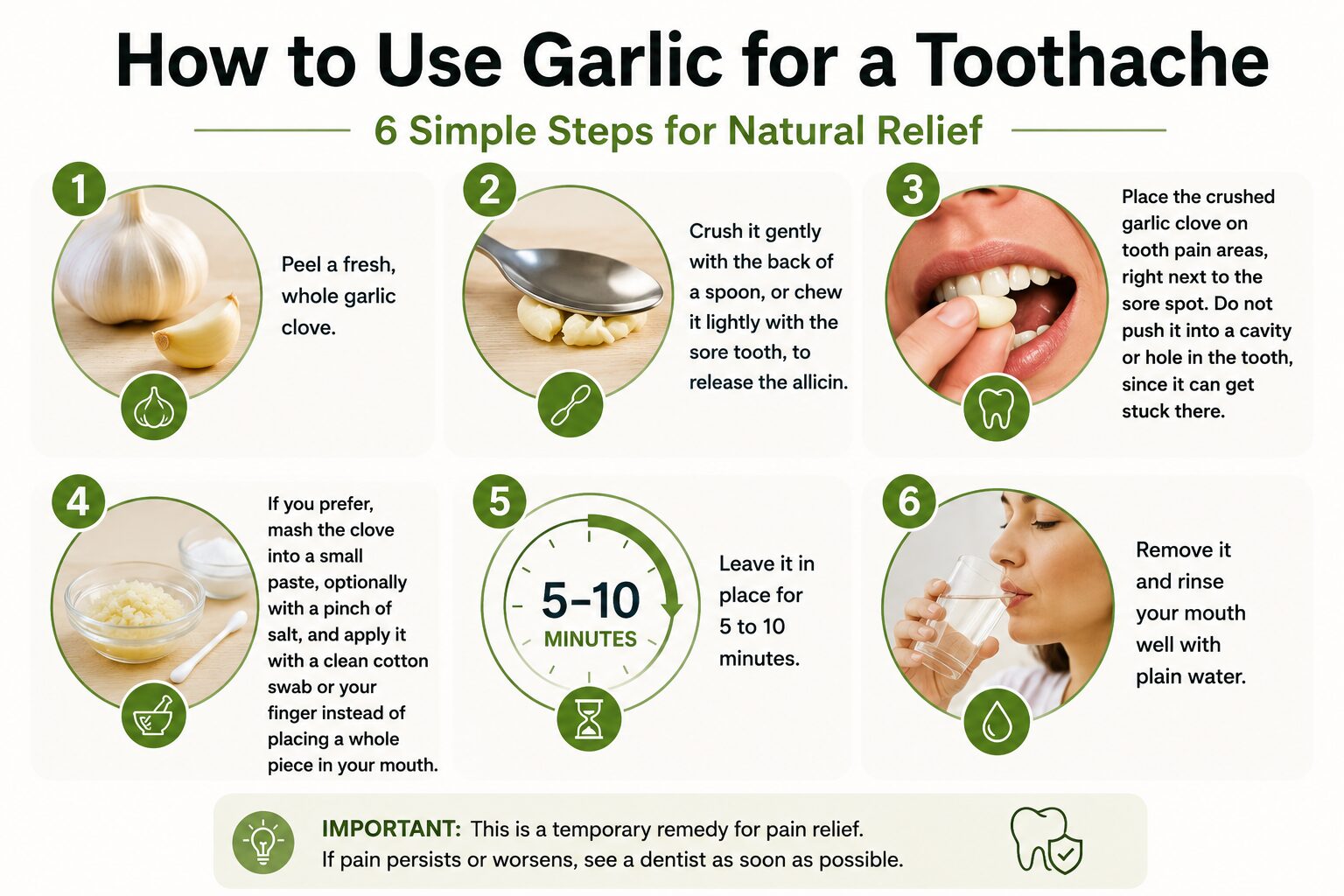
Here is how to apply garlic on a toothache safely:
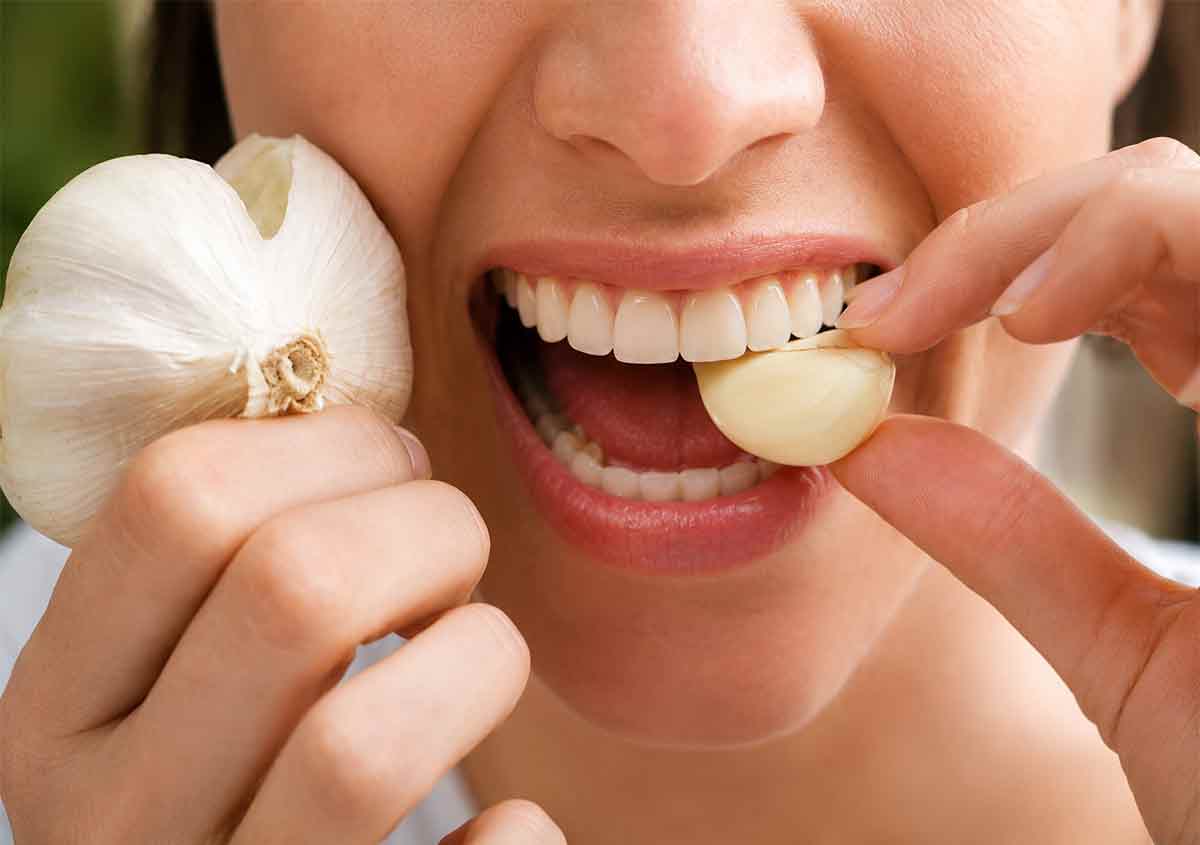
Biting or chewing a garlic clove gently on a garlic clove near the sore tooth is another way people use this remedy, and it does release allicin the same way crushing does.
Dr. Afzalian’s Note: Biting down can be uncomfortable. Be careful, especially if the tooth itself is already sensitive or cracked.
How Long Should You Leave Garlic on Your Toothache?
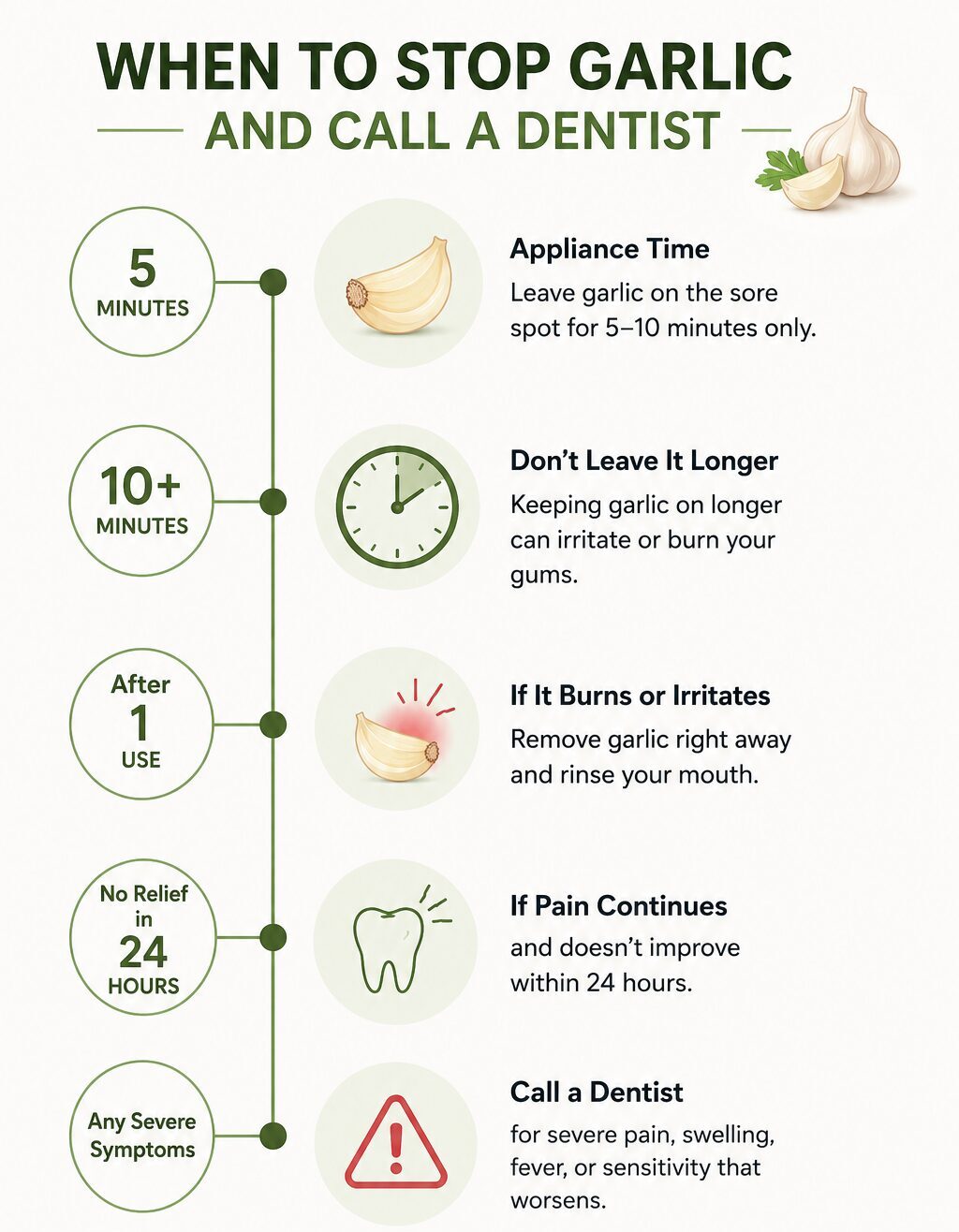
Stick to 5 to 10 minutes for the garlic toothache remedy. Allicin does its work fairly quickly, so leaving garlic on any longer does not add extra pain relief. What it does add is more contact time for garlic’s natural sulfur compounds to sit against your gum or tooth, which raises the risk of irritation or a burning feeling. Once the 5 to 10 minutes are up, take the garlic out and rinse your mouth thoroughly.
Why Do Sources Disagree on Timing?
For how long to leave garlic on a toothache, you’ve probably seen different numbers. Some sites say 5 to 10 minutes, others say 15 to 20. Real users report the same split: some burn within minutes, others feel fine at 20.
Here’s why: the study most often cited for this remedy didn’t test a single sitting at all. It tested people applying garlic paste once a day for five days, not a one-time use, so it doesn’t actually answer “how many minutes.”
Treat time as a limit, not a goal:
- Start with 5 minutes.
- If it stings, burns, or feels sharp, take it out right away. That is not a sign it’s working; it’s a sign your tissue has had enough.
- Do not go past 10 minutes, even if it still feels fine.
- Rinse your mouth well with water once you’re done.
Dr. Nima Afzalian recommends 5 to 10 minutes, since there is no version of this remedy where more time means more relief. Past 10 minutes, you are only adding burn risk with nothing to show for it.
How Many Times a Day Can You Put Garlic on a Toothache?
Dr. Nima Afzalian recommends no more than 2 to 3 applications a day, with at least an hour between each one. That gap gives your gum tissue time to settle before it’s exposed to garlic again.
If you notice redness, soreness, or irritation that lingers, stop for the rest of the day instead of reapplying on schedule. Garlic doesn’t build up a stronger effect the more you use it, so there’s no benefit to reaching for it more often, hoping for better relief.
Needing it three times a day for more than a day or two is a sign on its own. In Dr. Afzalian’s experience, a toothache that keeps demanding repeat treatment is one garlic won’t solve, and it’s time to have it looked at.
Precautions, Side Effects, and Risks
Putting garlic on a toothache is generally safe in small amounts for a short time, but there are real risks, and some people should be more careful.
- Garlic’s sulfur compounds irritate soft tissue, and inflamed gums are already extra sensitive. The burning is a direct reaction, not a sign it’s working.
- If you have a known garlic allergy, skip this remedy and use something else on this page instead.
- Garlic can mildly affect blood clotting. Check with your doctor or pharmacist first if you’re on blood-thinning medication.
- If you are pregnant and breastfeeding, talk to your doctor before trying this, since repeated use hasn’t been studied enough in pregnancy or nursing to call it fully safe.
- Kids’ gum tissue is more sensitive, and reactions are less predictable. Check with a pediatric dentist first.
- Don’t press garlic into an open cavity or hole in the tooth. It can lodge there and be hard to remove.
Can garlic make a toothache worse? Yes, if it’s left on too long or pressed directly against already inflamed or broken tissue, the irritation it causes can make things feel worse instead of better. If that happens, take it out, rinse with water, and stop using it. If your pain feels severe or out of the ordinary rather than a routine ache, seek emergency dentistry to take a look sooner rather than later.
What Garlic Won’t Fix
Garlic does not treat the actual cause of a toothache. It only calms surface discomfort for a short while. It will not repair a cavity, clear a tooth infection or abscess, fix a cracked tooth, or protect an exposed nerve. Those problems need a dentist’s exam and the right treatment, which might be a filling, a root canal, or in some cases an extraction.
If garlic isn’t helping, or the relief only lasts a few minutes, that’s a sign the problem is bigger than something a home remedy can manage. At that point, the next step is calling a dentist rather than trying more garlic or switching remedies over and over.
Other Home Remedies for Toothaches
Garlic is only one option. These other home remedies for toothache pain offer the same kind of short-term comfort, not a fix for the real problem.
- Cold and Heat Therapy: A cold compress dulls pain and calms swelling. Gentle warmth afterward eases tension and improves blood flow. Switching between the two often works better than either alone.
- A Saltwater Rinse: Half a teaspoon of salt in warm water, swished around the sore area, loosens trapped food and has a mild disinfecting effect.
- Over-the-Counter Pain Relievers: Ibuprofen or similar, taken as directed, reduce pain and swelling for a while.
- Peppermint Tea Bags: A warm, used tea bag against the tooth has a numbing effect. Cooling it in the fridge first works too.
- Thyme: Chewing fresh thyme or rinsing with diluted thyme oil has antibacterial properties similar to garlic.
- Aloe Vera: Applied near the sore area, it can calm swelling and discomfort.
- Wheatgrass: Rinsing with wheatgrass juice may help fight oral bacteria and ease inflammation.
- A Diluted Hydrogen Peroxide Rinse: Equal parts peroxide and water, swished briefly, helps with plaque and mild gum inflammation. Never swallow it.
- Vanilla Extract: Dabbed on with a cotton swab, its alcohol content gives a mild numbing effect.
- Clove Oil: Diluted with a carrier oil and applied with a cotton ball, it contains eugenol, which numbs pain and calms inflammation.
None of these, including garlic, replaces an actual diagnosis. They only help you get through until you can see a dentist.
When to Stop Home Remedies and Call a Dentist
Home remedies are meant to be temporary. Call your dentist when:
- Pain that lasts more than a day or two
- Pain that is getting worse instead of better
- Swelling in your face, jaw, or gums
- A fever along with the tooth pain
- Pain sharp enough that you can’t eat, sleep, or focus
If any of these apply, don’t wait it out with more remedies. Dr. Nima Afzalian and the team at My Dental and Implants treat toothaches every day and can quickly find out what’s really going on, whether that’s a cavity, an infection, or something else. Our routine dental cleanings in Glendale are also one of the best ways to catch small problems early, before they turn into a toothache in the first place.
Don’t tough it out. Call My Dental and Implants today:
- Visit us at 6637 West Peoria Ave, Suite D-2, Glendale, AZ 85302.
- Call us at (623) 300-2550.
This article is for general information only and is not a substitute for a dental exam or diagnosis. If your tooth pain is severe, lasts more than a day or two, or comes with swelling or fever, contact a dentist right away.
FAQs
Can I put garlic on my toothache?
Yes, in small amounts and for a short time. Crushed fresh garlic applied for 5 to 10 minutes may ease discomfort temporarily, though it is not a proven treatment.
Is it safe to put garlic directly on the gums?
For a few minutes, yes, for most people. Direct or prolonged contact with already irritated gums increases the risk of a burning feeling, so keep it short.
How do I apply garlic to a toothache safely?
Use a fresh clove, crush or chew it gently to release allicin, place it near the sore tooth or gum rather than inside a cavity, keep it there for 5 to 10 minutes, then rinse well with water.
Can garlic powder treat a toothache?
Not effectively. Garlic powder does not contain meaningful allicin, the compound responsible for garlic’s antibacterial effect, so it won’t give you the same relief as fresh garlic.
How long should I leave garlic on my tooth?
About 5 to 10 minutes, then rinse with water. Longer contact does not add relief and raises the risk of irritating your gums.
Can I use garlic on a toothache overnight?
No. Leaving garlic on for hours or overnight raises the risk of burning soft tissue with no added pain relief.
Is it safe to use garlic for a child's toothache?
Check with a pediatric dentist or doctor first. A child’s gum tissue is more sensitive, and reactions can be harder to predict than in adults.
Share this Article

Dr. Nima Afzalian's
Dr. Nima Afzalian's
journey in dentistry began at 12 when he experienced the transformative power of
dental care during a tooth-filling procedure. That pivotal moment ignited his passion for dentistry, and
he has since dedicated his life to making a difference in people's lives by relieving pain and
discomfort through his expertise.
Nima earned his bachelor's and master's degrees in Biomedical Engineering from the
prestigious Barrett
Honors College at Arizona State University. Subsequently, he obtained his dentistry doctorate
from the
Midwestern College of Dental
Medicine, graduating with honors, with recognition in Dental Implants and
the Dean's Award as the Top Clinician of his class.
With his extensive education, clinical excellence, and genuine dedication to patient well-being, Dr.
Nima Afzalian is excited to provide you with the highest level of care for all your dental needs. When
you choose Dr. Nima, your oral health is in capable hands!
Success Stories
We are blessed with clients and patients who are loyal to us and have the nicest things to say about us.
Translate »