
16
Jul
Can You Reverse Bone Loss in Teeth?
Published: July, 13th, 2026
Medically reviewed by: Dr. Nima Afzalian, D.M.D.
Can you reverse bone loss in teeth? Reversing bone loss in teeth is not usually possible once gum disease has caused bone damage.
Natural steps like brushing, cleaning between teeth, eating well, avoiding tobacco, and managing health conditions can protect your gums and slow further damage. However, they usually cannot regrow bone already lost from periodontitis.
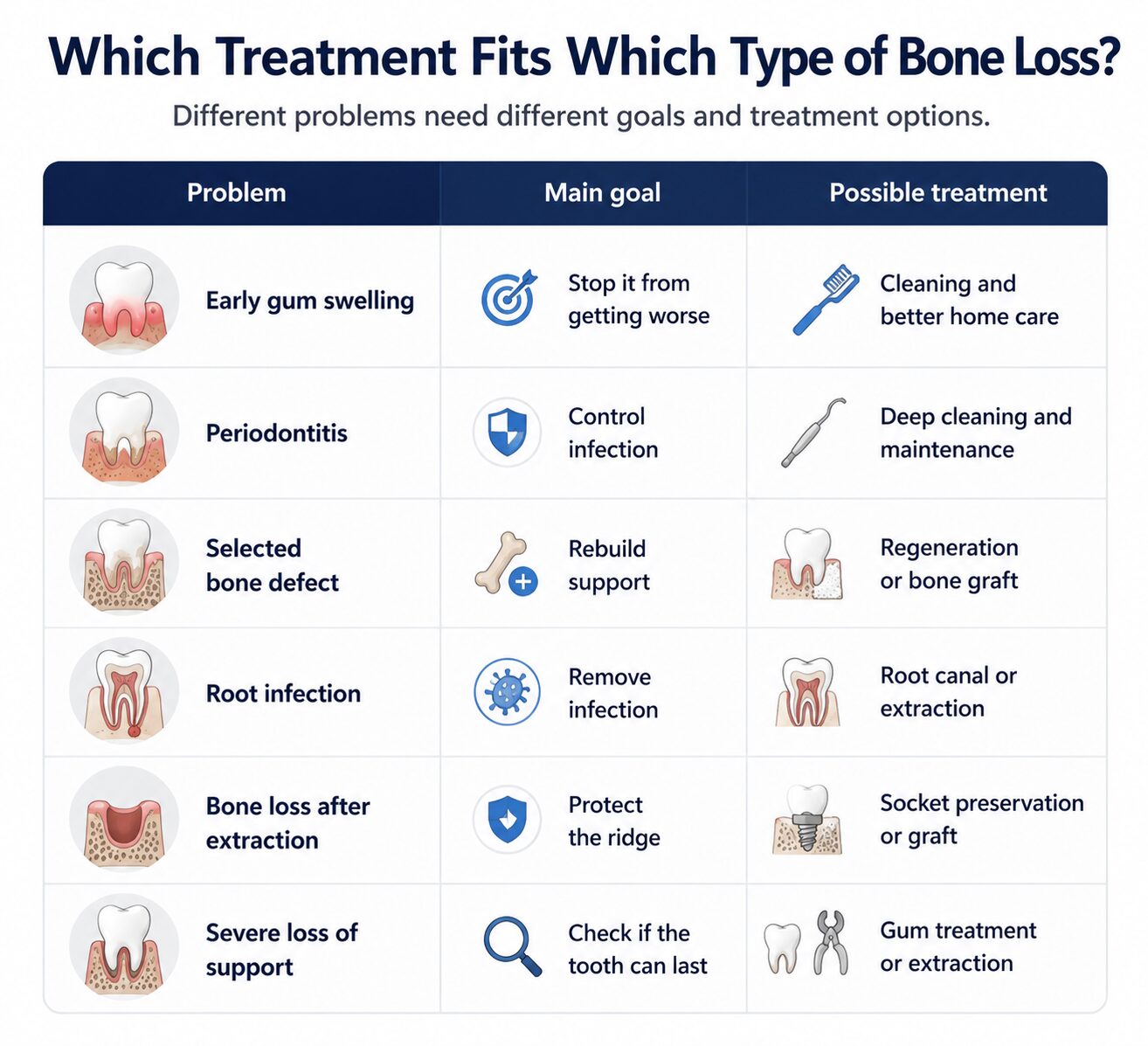
A dentist can treat the cause of bone loss. Deep cleaning can remove bacteria and tartar below the gums, while treatments like bone grafting or guided tissue regeneration may rebuild support in selected cases.
In this article, we explain what natural care can do, what professional treatments can help with, and how to stop bone loss in teeth.
What Does “Bone Loss in Teeth” Actually Mean?
Teeth are not bones. The phrase “bone loss in teeth” usually means loss of the bone that surrounds and supports the tooth roots. Healthy bones help hold each tooth firmly in place. The periodontal ligament connects the tooth root to this bone. Gum tissue protects the area from bacteria.
When bone levels fall, deep spaces can form between the gums and teeth. These spaces are called periodontal pockets. Less bone support can also cause teeth to move, shift, or feel loose.
The National Institute of Dental and Craniofacial Research states that untreated periodontal disease can damage the tissues and bone that hold teeth in place. Severe cases may lead to loose teeth or tooth loss.
Can Bone Loss Around Teeth Be Reversed?
The answer depends on what “reversed” means. A dentist may be able to stop the disease and prevent more bone loss. In some cases, procedures like bone grafting or guided tissue regeneration may help rebuild part of the lost support. However, full bone regrowth is not possible in every case. The result depends on the amount of remaining bone, the type of damage, infection control, tooth condition, health factors, and daily oral care.
Can gum disease bone loss be reversed completely? Usually not. The main goal is to control the disease, protect the remaining bone, and rebuild support when possible.
Types of Dental Bone Loss
Bone loss around teeth does not always happen for the same reason. The three common types include:
Bone Loss From Gum Disease
Periodontitis happens when bacteria and inflammation damage the gums and the bone that supports the teeth. Gingivitis can cause red, swollen, or bleeding gums, but it does not usually cause bone loss. When gum disease reaches the bone, treatment focuses on controlling the infection and protecting the support that remains.
Can gum disease bone loss be reversed? In some cases, selected areas may improve with professional treatment, but full natural regrowth is not usually possible.
Jawbone Loss after a Missing or Extracted Tooth
When a tooth is removed, the bone around the empty space can slowly shrink because it no longer supports a tooth root. This change can affect future tooth replacement options, including dental implants. Procedures like socket preservation may help maintain more bone after extraction, but they cannot completely prevent normal bone changes.
Bone Damage From a Tooth-Root Infection
Sometimes, an infection inside a tooth can spread to the bone near the tip of the root. This type of bone damage is different from bone loss caused by gum disease. A root canal can remove the infection and allow the area around the root to heal. Your dentist can determine the cause of the bone damage through an exam and dental X-rays.
What Can Natural Home Care Actually Do?
Reversing bone loss in teeth naturally is not completely possible with home care, but good home care can:
- Reduce plaque around the teeth and gums.
- Lower gum inflammation.
- Help protect the bone that remains.
- Support healing after dental treatment.
- Reduce the risk of the disease returning.
- Help control risk factors that affect gum health.
Good home care includes:
- Brush twice a day with fluoride toothpaste.
- Clean between the teeth each day.
- Use floss, an interdental brush, or another tool recommended by your dentist.
- Keep regular dental and periodontal visits.
- Avoid tobacco.
- Work with your doctor to control diabetes.
- Eat a balanced diet.
- Follow the maintenance plan from your dental team.
The NIDCR recommends daily plaque control, professional dental care, and tobacco cessation to protect gum health. It also states that smoking can raise the risk of gum disease and make treatment less successful.
Home remedies for bone loss in teeth cannot remove hard tartar below the gums. They also cannot clean an infected periodontal pocket or replace professional care.
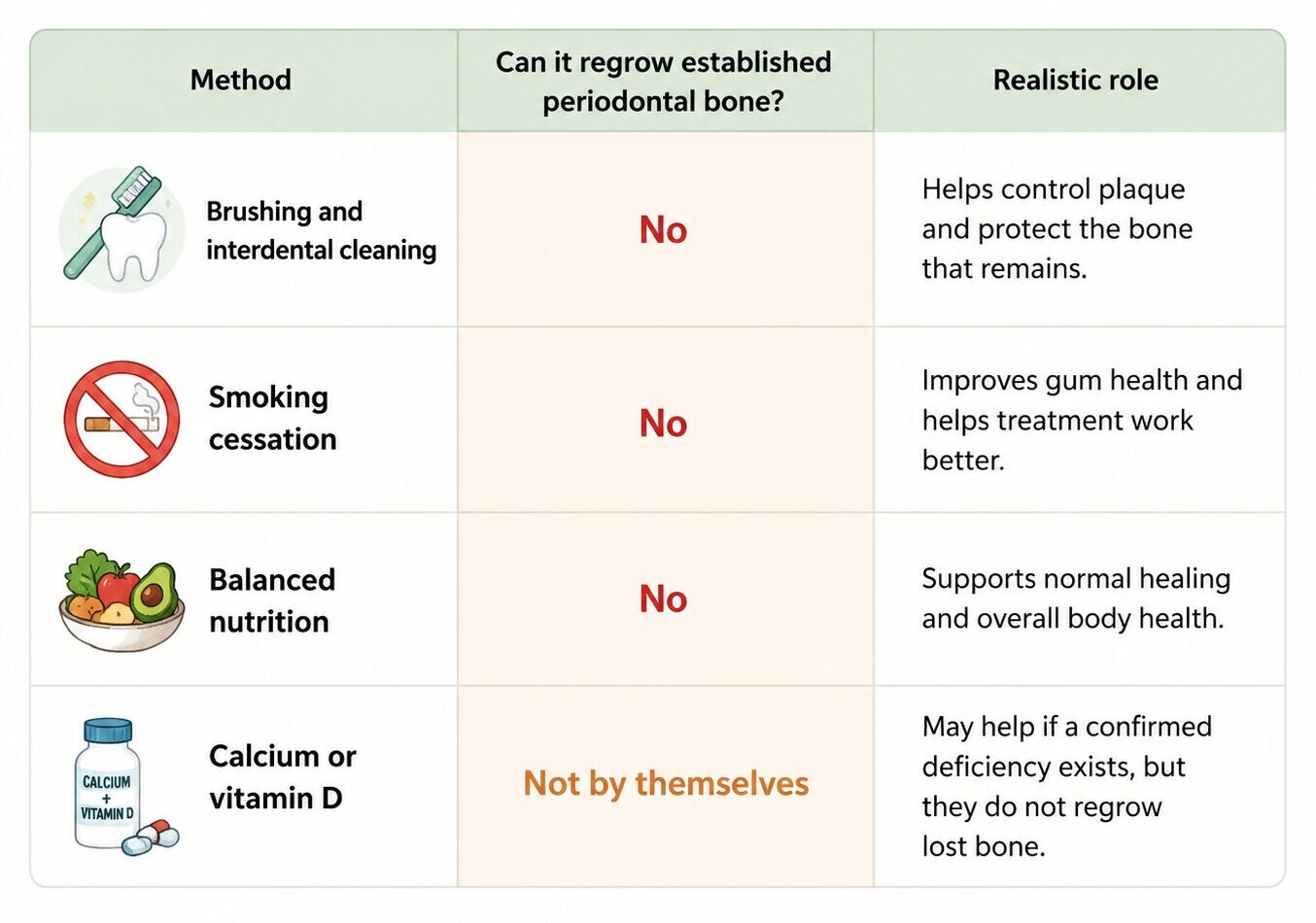
Vitamins for bone loss in teeth cannot cure periodontitis. Calcium supports bone health, but it does not regrow bone by itself. Oil pulling has not been shown to reverse dental bone loss.
What Causes Bone Loss Around Teeth?
Periodontitis is a main cause. Plaque can harden into tartar that needs professional removal.
Other causes of bone loss around teeth include:
- Smoking or tobacco use
- Poor plaque control
- Uncontrolled diabetes
- Missing teeth
- Tooth-root infections
- Dental injuries
- Heavy bite pressure or grinding
- Some health conditions or medicines
- Family risk
Bone loss does not always mean poor brushing. Health, genetics, smoking, and access to care also affect risk.
Signs You May Have Bone Loss Around a Tooth
Symptoms of bone loss in teeth may include:
- Bleeding or swollen gums
- Gum recession
- Bad breath
- Pus near the gums
- Shifting teeth or new gaps
- A changed bite
- Loose teeth from bone loss
- Pain when chewing
Bone loss may be painless at first. Some people only find it after gum measurements or a bone loss around teeth X-ray.
How Does a Dentist Diagnose Bone Loss?
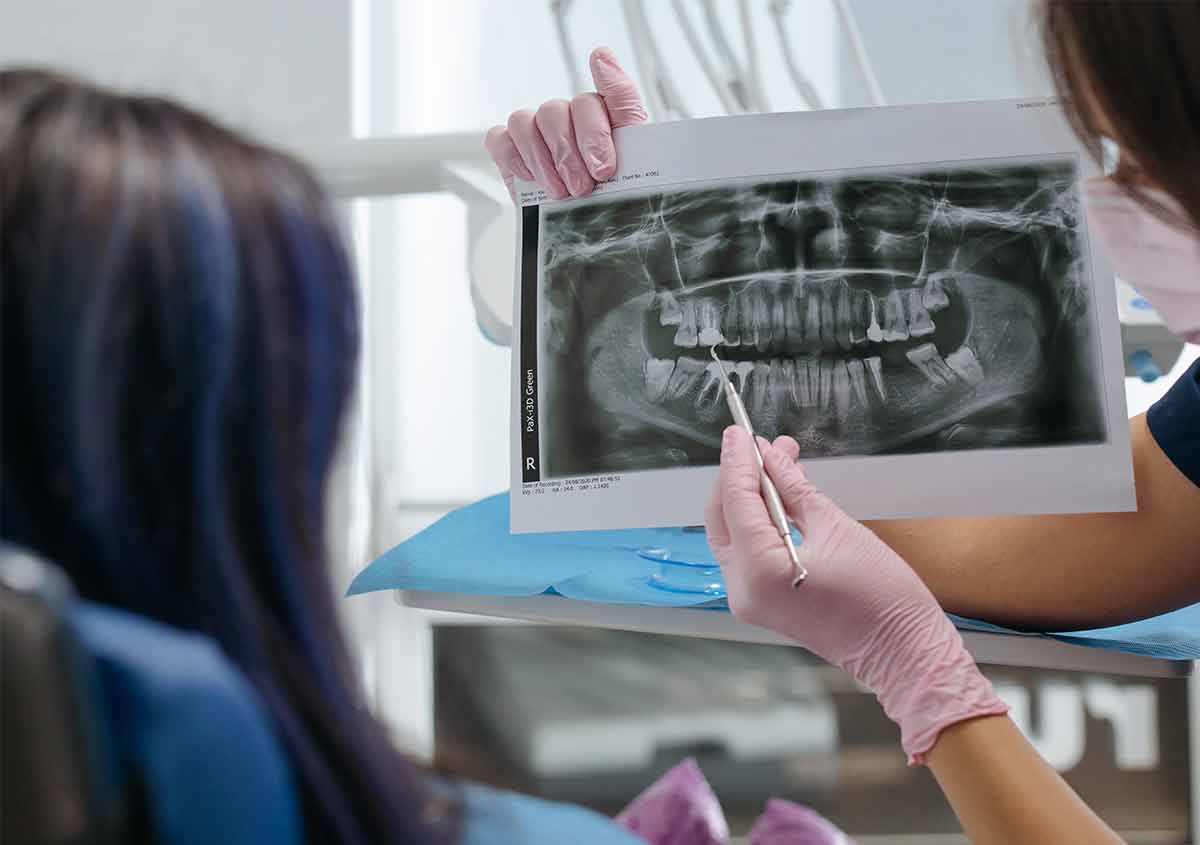
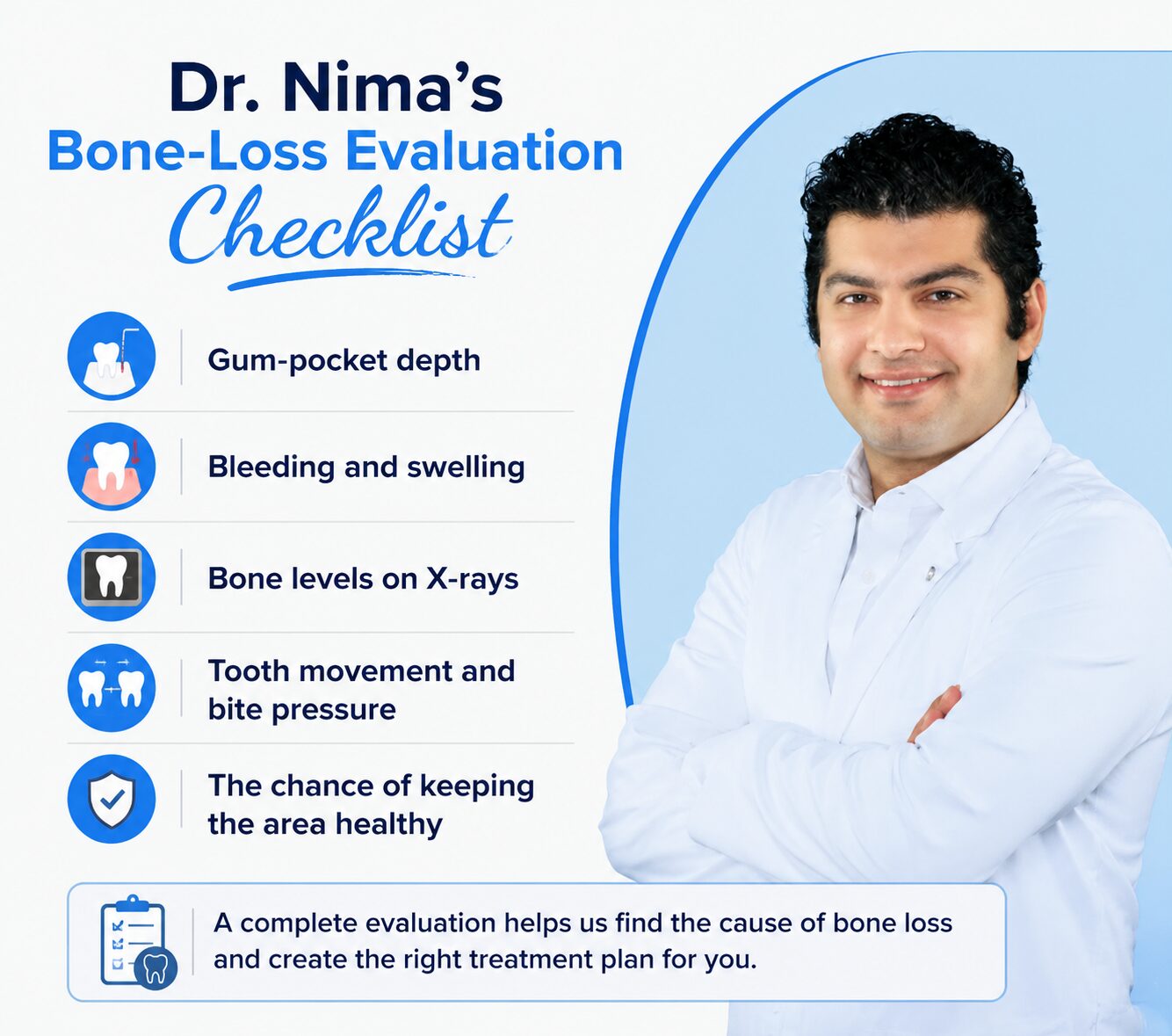
A dentist checks health history, gum-pocket depth, bleeding, X-rays, tooth movement, bite pressure, cracks, decay, and infection. A CBCT scan may help with complex infections, grafts, or implant plans. Not every patient needs one.
How to Reverse Bone Loss in Teeth
To reverse bone loss in teeth, you need to match your treatment to the cause and level of damage.
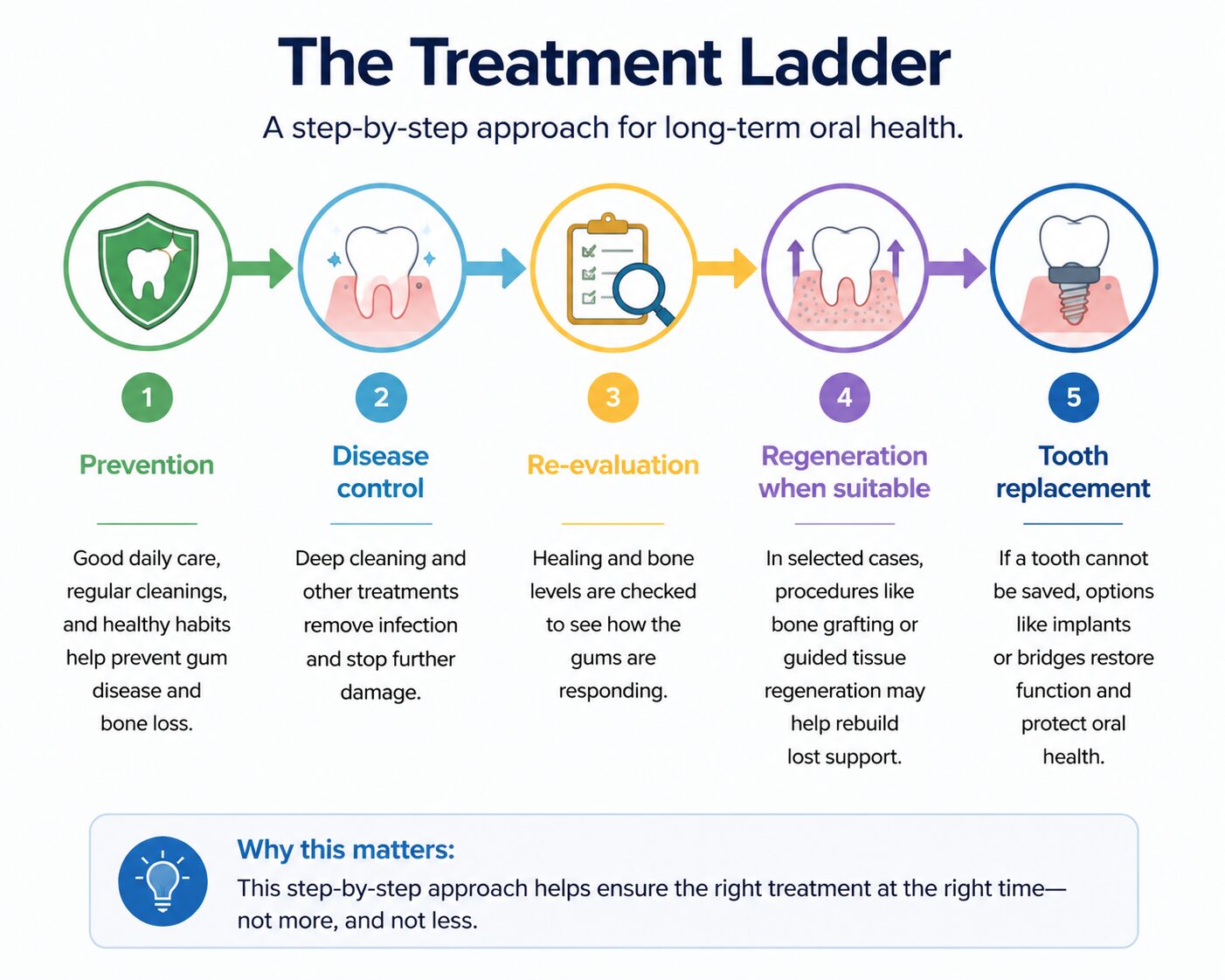
Here are common dental treatments for reversing bone loss:
Scaling and Root Planing
Scaling and root planing is often the first non-surgical treatment for periodontitis. It removes plaque, tartar, and bacterial deposits from below the gums. This treatment may help control infection and protect the bone that remains. It should not be presented as a guaranteed way to rebuild lost bone. Patients near the practice can ask about scaling and root planing in Glendale after a full gum and X-ray evaluation.
Periodontal Maintenance
Periodontitis needs long-term control. It can return if bacteria collect in deep or hard-to-clean areas.
Periodontal maintenance visits may include:
- Gum-pocket measurements
- Cleaning above and below the gumline
- A check for bleeding
- A review of home care
- X-rays when needed
- A check for new tooth movement
A regular professional dental cleaning helps prevent gum problems. Patients with a history of periodontitis may need a different maintenance schedule from patients with healthy gums.
Guided Tissue Regeneration
Guided tissue regeneration uses a special membrane near the bone defect. The membrane protects the area while the tissues heal. This may allow the periodontal ligament and bone to rebuild part of the support around a tooth. The procedure only works for selected defects.
Bone Grafting and Regenerative Materials
Bone grafting for teeth places graft material into a damaged area. The material creates support for new bone as the site heals.
A dentist or periodontist may also use:
- A protective membrane
- Tissue-stimulating proteins
- Other regenerative materials
Bone graft vs guided tissue regeneration is not always an either-or choice. Some procedures use both graft material and a membrane. The best choice depends on the defect.
Root Canal Treatment
A root canal may help when bone damage comes from an infection inside the tooth rather than periodontitis. Your dentist removes the infected tissue from inside the tooth, cleans the canals, and seals the space. The area near the root may then heal over time.
Extraction and Ridge Preservation
A tooth may need extraction when it has severe bone loss, a deep crack, major root damage, or an infection that cannot be controlled. After removal, socket preservation may help keep more bone in the area. This can support a future bridge, denture, or implant plan. It cannot stop all normal bone changes after extraction.
Dental Implants After Bone Loss
Bone loss does not always prevent implant treatment. Many patients can still receive dental implants in Glendale after a full bone evaluation. Some patients need a graft before implant placement. Others may have strong enough bones in another part of the site.
When Is a Tooth Too Damaged to Save?
A tooth may be too damaged to save when the support around it is too weak, or the damage cannot be repaired. This may happen when:
- Most of the bone around the tooth is gone.
- The tooth is very loose and cannot support normal chewing.
- The root has a severe crack or damage.
- A serious infection cannot be controlled.
- The tooth cannot be cleaned or maintained after treatment.
- The tooth has a poor long-term outlook even after treatment.
Some teeth may become more stable after infection and swelling improve. However, when the damage is too advanced, removing the tooth and replacing it may be the safer option.
How to Prevent Bone Loss in Teeth
How to stop bone loss in teeth starts with early care. Steps that help protect the bone include:
- Brush twice each day.
- Clean between the teeth every day.
- Treat bleeding gums early.
- Complete deep cleaning when recommended.
- Attend periodontal maintenance visits.
- Stop smoking and tobacco use.
- Keep diabetes under control.
- Treat tooth infections
- Replace missing teeth at the right time.
- Wear a night guard if a dentist finds harmful grinding.
- Do not delay care for a loose or painful tooth.
Home care is important, but active periodontitis, deep tartar, root infections, and major bite problems need professional treatment.
When to See a Dentist
Bone loss often gets worse without obvious symptoms. Early treatment can help protect your teeth and reduce the chance of more damage. Schedule a dental visit if you notice any of these signs:
- Bleeding gums when brushing or flossing
- Swollen, red, or tender gums
- Gums pulling away from your teeth
- A loose or shifting tooth
- New spaces between your teeth
- Pain when biting or chewing
- Pus around a tooth or along the gumline
- Bad breath that does not go away
- A bad taste in your mouth
- A tooth that suddenly feels different when you bite
- Your dentist has told you that you have bone loss on an X-ray
- You have lost a tooth and want to replace it with a dental implant
If you already have gum disease, regular checkups and periodontal maintenance are important to help prevent further bone loss.
How My Dental & Implants Evaluates Dental Bone Loss
My Dental & Implants, we check more than one X-ray. The evaluation may include gum-pocket measurements, bone levels, bleeding, tooth movement, bite forces, gum health, infection, and the long-term outlook for each tooth.
Based on the findings, the next step may include:
- A professional cleaning
- Scaling and root planing
- Periodontal maintenance
- Restorative treatment
- Root canal treatment
- Tooth extraction
- Tooth replacement
- A referral to a periodontist
Dr. Nima Afzalian, D.M.D., earned his dental degree from Midwestern University College of Dental Medicine-Arizona in 2022. He also holds a Master of Science in Biomedical/Medical Engineering and a bachelor’s degree in Biomedical Engineering from Arizona State University.
His focus areas include dental implants, restorative dentistry, full-mouth rehabilitation, and crowns. Dr. Afzalian has received Honors in Dental Implants and the Dean’s Award as the Top Clinician in his class. He is licensed by the Arizona State Board of Dental Examiners.
My Dental & Implants evaluates gum health, tooth support, and bone levels for patients in Glendale, Peoria, and nearby West Valley communities. The next step may involve deep cleaning, continued maintenance, restorative care, tooth replacement, or referral for advanced periodontal treatment.
Patients who need bone loss treatment in Glendale, AZ, can visit:
- Our Address: 6637 West Peoria Ave, Suite D-2, Glendale, AZ 85302
- Our Phone Number: (623) 300-2550
FAQs
Can you reverse bone loss in teeth naturally?
Reversing bone loss in teeth naturally is not quite possible with home care. Home dental care can stop more damage, while selected defects may need professional treatment.
Can deep cleaning reverse bone loss?
Scaling and root planing control infection, but it does not promise new bone. Scaling removes plaque and tartar below the gums. Root planing smooths the roots. This can reduce bleeding, swelling, and pocket depth.
Can bone grow back around teeth after gum disease?
Some selected defects may improve after the infection is controlled.
Can deep cleaning restore bone around teeth?
Deep cleaning controls bacteria and tartar but does not replace all lost bone.
Can bone grafting save a loose tooth?
It may help a selected defect, but it cannot save every tooth.
Can dental implants work if I have bone loss?
Yes, for many patients. Some need a graft or a different implant plan.
Can the jawbone grow back after a tooth extraction?
A graft may keep or rebuild more bone, but full natural regrowth cannot be promised.
Share this Article

Dr. Nima Afzalian's
Dr. Nima Afzalian's
journey in dentistry began at 12 when he experienced the transformative power of
dental care during a tooth-filling procedure. That pivotal moment ignited his passion for dentistry, and
he has since dedicated his life to making a difference in people's lives by relieving pain and
discomfort through his expertise.
Nima earned his bachelor's and master's degrees in Biomedical Engineering from the
prestigious Barrett
Honors College at Arizona State University. Subsequently, he obtained his dentistry doctorate
from the
Midwestern College of Dental
Medicine, graduating with honors, with recognition in Dental Implants and
the Dean's Award as the Top Clinician of his class.
With his extensive education, clinical excellence, and genuine dedication to patient well-being, Dr.
Nima Afzalian is excited to provide you with the highest level of care for all your dental needs. When
you choose Dr. Nima, your oral health is in capable hands!
Success Stories
We are blessed with clients and patients who are loyal to us and have the nicest things to say about us.
Translate »