
16
Jul
What Can You Eat After Getting Crowns on Teeth?
Reviewed by: Dr. Nima Afzalian, D.M.D.
Reviewed and updated: July 2026
After a crown procedure, most people can go back to normal eating fairly soon. But the exact timing just depends on whether you have a temporary or permanent crown, and whether your mouth is still numb or a little sensitive.
In the first few hours, it’s smart to stick with soft foods (bananas, smoothies, soft-boiled eggs) and skip anything too hard, sticky, or crunchy (nuts, taffy, and popcorn). Once the numbness wears off and your dentist confirms the crown is settled, you can start easing back into your regular diet.
This guide, Dr. Nima Afzalian, D.M.D, from My Dental & Implants, walks you through exactly what to eat after getting crowns on teeth, what to avoid, and do’s and don’ts after tooth crown placement. It also covers the difference between temporary and permanent crowns, since that changes what’s safe for you to bite into.
What Foods to Eat After Getting a Crown?
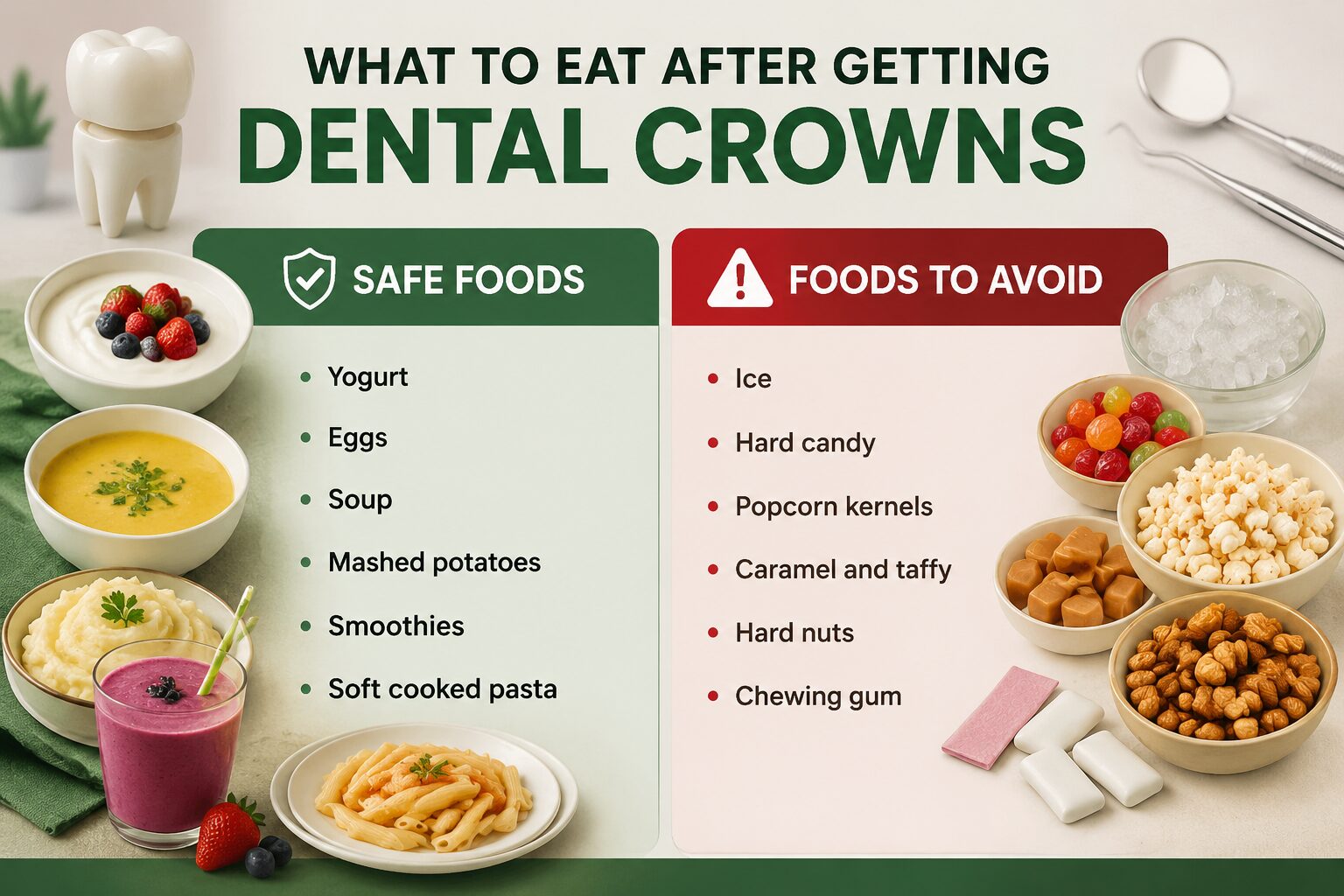
Right after your appointment, your goal is simple: eat something that doesn’t require a lot of chewing and won’t stress your new crown. Soft foods after dental crown placement are the safest bet, especially while any numbness or tenderness is still around.
Good options to try:
Soft Fruits and Vegetables
Bananas, berries, and other soft fruits are easy to chew and gentle on a new crown. Steamed vegetables, like carrots or broccoli, work the same way.
Yogurt and Smoothies
These give you plenty of nutrients in a drinkable form, so you’re not putting any real strain on the crown.
Eggs
Scrambled, soft-boiled, or as an omelet, eggs are an easy way to get protein without much chewing.
Tender Proteins
Baked or flaky fish is a good protein choice, and tender, well-cooked chicken works too.
Soup
A warm, nourishing soup requires almost no chewing; just make sure any chunks are cut small.
Oatmeal
A soft, easy alternative to eggs in the morning, especially if your tooth is still a little tender.
Mashed Foods
Mashed potatoes, mashed sweet potatoes, and even mashed avocado are filling without being hard to chew.
Pasta and Rice
Both are easy on a new crown as long as the pasta is cooked until soft.
Applesauce
A simple, soft snack that needs almost no chewing at all.
If your tooth feels sensitive, try to avoid foods and drinks that are extremely hot or cold for the first day or so. Room-temperature or lukewarm meals are much more comfortable while your mouth adjusts.
Meal Ideas
If you’d like a starting point for what to actually put on your plate, here are a few simple ideas.
- Breakfast: Overnight oats or porridge
- Breakfast: Scrambled eggs with soft toast
- Lunch: Jacket potato with cheese and baked beans
- Lunch: Tomato soup with a slice of buttered bread
- Dinner: Mashed potato and tender fish
- Dinner: Mild chicken curry with rice
What Foods to Avoid After Getting a Crown?
Some foods put too much stress on a new crown, especially while it’s still settling in. Hard, sticky, crunchy, and chewy foods are the main culprits, and they can loosen a temporary crown or damage a permanent one if you’re not careful.
Foods to avoid or eat with caution:
- Hard or Crunchy Foods
- Nuts, pretzels, and chips take a lot of force to chew, which raises the risk of a sore tooth or a cracked crown.
- Popcorn kernels and hard candy fall into this group too.
- Ice should be avoided entirely, since chewing on it is one of the most common ways crowns get damaged.
- Sticky and Chewy Foods
- Caramel, taffy, and fruit gummies can get stuck to your crown and pull at it, which makes them harder to clean away and easier to loosen
- Chewing gum, bagels, and tough or chewy meats can have a similar effect
- Extremely Hot or Cold Food: Very hot or very cold foods usually won’t hurt the crown itself, but your tooth can feel more sensitive than usual in the days after placement, so easing off the extremes for a bit tends to feel better.
For a temporary crown, this caution matters a lot because it’s only meant to hold for a few weeks. For a permanent crown, the risk is lower once it’s fully settled, but these foods can still chip or crack a restoration at any point, so most dentists suggest treating this as a long-term habit rather than a short-term rule.
If you eat foods that stress your crown, you risk damage that may eventually call for dental implants.
How Long After a Crown Can You Eat Normally?
The recovery time for a crown is different for each patient, since it depends on things like how numb you are, how sensitive the tooth feels, how the dental cement is holding, and whether your crown is temporary or permanent. That said, here’s a general idea of how soon after a crown you can eat:
| Time | Food guidance |
| First few hours | Wait until numbness fully wears off before eating anything. Choose soft foods if your tooth feels tender. |
| First 24 hours | Stick with soft, easy-to-chew meals. Avoid sticky and hard foods, especially if you have a temporary crown. |
| After the adjustment period | Most people can return to their normal diet, though it’s still smart to avoid habits that can damage any crown, like chewing ice or hard candy. |
Your dentist knows your specific case, so if their post-op instructions for a crown differ from this general timeline, always follow what they tell you.
What to Eat After Getting a Temporary Crown
A temporary crown is designed to protect your tooth for just a few weeks, until your permanent restoration is ready. It’s held on with a weaker cement, which means it’s more likely to come loose if you’re not careful with what you eat.
After a temporary crown, you can eat soft foods for the first few days, and if your dentist advises it, try chewing on the opposite side of your mouth. Sticky foods can pull a temporary crown right off, and hard or crunchy foods can crack it or knock it loose. It’s a small inconvenience for a short time, but it helps you avoid an extra trip back to the dentist’s chair.
To set your diet better, look at this temporary crown vs permanent crown food table:
| Eating consideration | Temporary crown | Permanent crown |
| When to eat | Follow your dentist’s instructions and wait until numbness wears off. | Follow your dentist’s instructions and wait until numbness wears off. |
| Recommended foods | Soft, easy-to-chew foods. | Normal foods can usually resume once the crown feels settled. |
| Foods to avoid | Sticky, hard, crunchy, and chewy foods. | Extremely hard foods that could chip or crack the crown. |
| Chewing guidance | Chew away from the temporary crown when advised. | Normal chewing can usually resume once the crown feels comfortable. |
| Level of caution | High, since temporary cement loosens easily. | Lower, but the crown still isn’t indestructible. |
Can You Eat Hard Foods With a Permanent Crown?
Once your tooth has adjusted and your dentist has confirmed a good fit, a permanent crown is built to handle normal, everyday chewing. That’s good news if you’ve been eating carefully for weeks.
Still, “normal chewing” doesn’t mean “anything goes.” Permanent crowns are strong, but they aren’t indestructible. Chewing ice, hard candy, popcorn kernels, or very hard nuts can chip or crack even a well-made crown. So carefully plan what to eat after getting crowns. Think of it less like a strict diet and more like a habit worth keeping for as long as you have the crown.
What If Your Crown Hurts When You Eat?
A little sensitivity to pressure, heat, or cold after crown placement is common, and it usually settles down within a few days to a couple of weeks as your tooth adjusts.
However, if pain is severe, gets worse instead of better, lasts longer than a couple of weeks, or shows up every single time you bite down, it could point to something like a high bite, a loose crown, an inflamed nerve, decay, or an infection. In those cases, it’s best to check in with your dentist rather than wait it out.
If you want to avoid hurting your crown, follow these permanent crown aftercare tips:
- Brush twice a day, including gently around the gumline near your crown.
- Floss daily around the crowned tooth, sliding the floss out rather than snapping it up.
- Keep up with regular dental checkups.
- Avoid using your teeth as tools, like opening packages or biting your nails.
- Ask your dentist about a night guard if you tend to grind or clench your teeth.
Dr. Nima Afzalian’s Tip! The crown itself can’t develop decay, but the natural tooth underneath it and the gum tissue around its edges still can. That’s why brushing and flossing around the crown matters just as much as caring for your other teeth.
Tips for Eating After a Dental Crown
A few practical habits can make the whole process easier, whether you’re a day out from your appointment or a few weeks in.
- Wait until numbness fully wears off before eating anything.
- Take smaller bites than usual.
- Cut firm foods into smaller pieces before eating.
- Chew on the opposite side of your mouth if your dentist recommends it.
- Choose moderate food temperatures while your tooth feels sensitive.
- Eat slowly and pay attention to how the crown feels.
- Stop and check with your dentist if chewing causes pain or you notice any movement in the crown.
When to Call Your Dentist About Your Crown
Most people move through crown recovery without any issues, but a few situations call for a dentist visit rather than waiting things out. Reach out to your dentist if you notice:
- A loose or missing crown
- Severe or worsening pain
- Swelling or other signs of infection
- A cracked or chipped crown
- Sensitivity that doesn’t improve after a couple of weeks
- A bite that feels uneven or “off”
- Difficulty chewing on that side of your mouth
- Food repeatedly getting trapped around the crown
At My Dental & Implants, Dr. Nima Afzalian, D.M.D., provides dental crown treatment in Glendale, along with clear aftercare guidance for crowns, implants, and other restorative work, so you always know what to expect once you leave the chair.
Dr. Afzalian is licensed by the Arizona State Board of Dental Examiners (license D011364, certified May 23, 2022) and focuses on implants, restorative dentistry, full mouth rehabilitation, and crowns, with honors in dental implants and a Dean’s Award as top clinician.
If something doesn’t feel right with your crown, have it checked rather than guessing:
- Call us at (623) 300-2550.
- Visit My Dental & Implants at 6637 W Peoria Ave Suite D-2, Glendale, AZ 85302.
This article is for general education only and is not a substitute for personalized dental advice. Always follow the specific instructions given by your treating dentist. Sources referenced include the Cleveland Clinic’s dental crown guide and the American Dental Association’s patient education resources.
FAQs
What to eat after getting crowns on teeth?
Choose soft foods like eggs, yogurt, soup, and mashed potatoes. Return to normal eating based on your dentist’s advice and how your crown feels.
How soon can I eat after getting a dental crown?
Wait until numbness wears off before eating. Follow your dentist’s instructions about the crown and cement.
Can I eat normally after a permanent crown?
Yes, most patients can return to normal eating once the crown feels comfortable. Avoid very hard foods like ice.
Can I eat pizza after getting a crown?
Yes, after numbness wears off. Avoid hard crusts and chewing on a temporary crown.
Can I drink coffee after getting a crown?
Yes, but avoid very hot drinks if your tooth feels sensitive. Wait until the numbness is gone.
How long does crown sensitivity last?
Mild sensitivity usually improves within a few weeks. Contact your dentist if it gets worse or continues.
Can I chew gum with a crown?
Avoid gum with a temporary crown. With a permanent crown, only chew gum if it feels comfortable.
What should I do if my crown comes off while eating?
Save the crown, avoid chewing on that tooth, and contact your dentist. Do not use glue to reattach it.
What can kids eat after getting crowns?
Soft, age-appropriate foods are usually best. Follow the child’s dentist’s instructions.
Share this Article

Dr. Nima Afzalian's
Dr. Nima Afzalian's
journey in dentistry began at 12 when he experienced the transformative power of
dental care during a tooth-filling procedure. That pivotal moment ignited his passion for dentistry, and
he has since dedicated his life to making a difference in people's lives by relieving pain and
discomfort through his expertise.
Nima earned his bachelor's and master's degrees in Biomedical Engineering from the
prestigious Barrett
Honors College at Arizona State University. Subsequently, he obtained his dentistry doctorate
from the
Midwestern College of Dental
Medicine, graduating with honors, with recognition in Dental Implants and
the Dean's Award as the Top Clinician of his class.
With his extensive education, clinical excellence, and genuine dedication to patient well-being, Dr.
Nima Afzalian is excited to provide you with the highest level of care for all your dental needs. When
you choose Dr. Nima, your oral health is in capable hands!
Success Stories
We are blessed with clients and patients who are loyal to us and have the nicest things to say about us.
Translate »